After
the New York Knicks won the NBA championship, my writer
friends who knew I have been a fan of the team forever
suggested I change the spelling of my name to ‘Knick.’
According to the media, the ticker tape parade the
city gave the Knicks surpassed every one given since
General Douglas MacArthur in the Korean War era. And
the city itself saw a coming together which was not
less than astounding given huge opposition to its
Islamic Mayor Mamdani, major political squabbles,
rent cost protest marches, and huge divisions among
its world record diverse population.
The
joy that that event brought actually buried news of
the mad Middle East war, the Ukrainian horror, record
floods and storms all over North America, and hundreds
of political misdeeds. It dominated the headlines.
But it wasn’t the only sports event that managed to
cheer everybody up. International golf tournaments
featured players from everywhere with record cheering
crowds. Tennis tournaments countered with similar
elements. And World Cup soccer held in stadiums all
over the United States, Canada and Mexico attracted
millions in sold-out crowds and millions of TV watchers
all over the planet.
The
significance of Sports and its recent success in uniting
peoples has been often dismissed because of opposition
to instances of violence. Nevertheless, historical
queries reveal interesting facts about even the most
respected cultures. Classical Greece pankration
(a combination of boxing and wrestling) often caused
death as did regular boxing and wrestling. Tactics
included strangulation, joint locks, deep cutting
with thongs, and kicking. In Rome, the desire of crowds
and even educated officials for violent death resulted
in hundreds of years of deadly gladiatorial combat.
Countless countries ever since have indulged in relentless
thirst for violence and we still have bullfighting
to salve primitive fandom.
But
in the contemporary sports -- baseball, basketball,
hockey, soccer, lacrosse, and other contact sports
-- there is never any intent to kill an opponent.
And, although boxers and football players often suffer
injuries, fatal accidents rarely occur. Extreme preparation
was behind an NFL game a couple of years ago when
a Buffalo Bill defensive back was revived from a freak
heart stoppage which would have been fatal had not
the league required teams to have hospital level equipment
on the field.
Each
year the NCAA awards over $4 billion in athletic scholarships
to over 180,000 student-athletes, helping them pursue
their goals on the field and in the classroom. With
numbers like these there are certain to be abuses
but the NCAA has done a creditable job in limiting
the problem. The benefits include promotion of physical
activity and improvement of motor skills for health,
performance and psychosocial development. Participants
also gain a chance to be part of a new community.
There is strong evidence that participating in sports
lowers rates of anxiety and depression, lowers amounts
of stress, reduces risk of suicide, and increases
higher self-esteem, confidence, cognitive performance,
creativity, and increases life satisfaction. Besides
this, sports provides a platform for people to come
together and support their country. International
events like World Cup and Olympics show national pride
and unity.
In
my own long life there have been many sports events
that smack of Horatio Alger irony. I had an A-student
who loved basketball but could not master jump shots.
He went to a ‘basketball’ college despite acceptance
at an Ivy League school. After school, he played on
a small semi-pro team and was spotted by Red Holzman,
the New York Knicks coach, who liked his determination
and defensive focus. Holzman brought him up to the
Knicks and, one night at Madison Square Garden, I
had tears in my eyes as I saw him drive right through
the Celtics Bill Russell helping the team to go on
to their last NBA championship. Another student who
had cerebral palsy was one of the first handicapped
entrants in the New York Marathon, and who upon graduation
could not get a job. I was with her when, despite
falling and exhaustion, she finished the 5-borough
course at 11:00 that night. I had phoned the media
during the run and we went to the White House the
next day. She soon fielded dozens of offers from TV
and finally received employment.
Sports
in the ancient world thrived. The oldest team sport
was played by the Olmecs, Mayans, and Aztecs over
3,400 years ago and still survives in northwestern
Mexico. Dubbed ulama, this modern survivor
of the ancient sport has strict rules: players could
not use their hands or feet in propelling a solid
9-pound rubber ball; only hips, elbows and forearms
could be used.
The
great Greek tradition of the Olympics first began
in 776 B.C. It was always accompanied by other major
Pan-Hellenic sport festivals: the Pythian games in
Delphi, the Nemean games at Nemea and the Isthmian
games at Corinth. The first ‘world sporting’ event
-- the modern Olympics -- began in Athens in 1896
when French Baron de Coubertin first placed sports
on a global scale. Presently, both 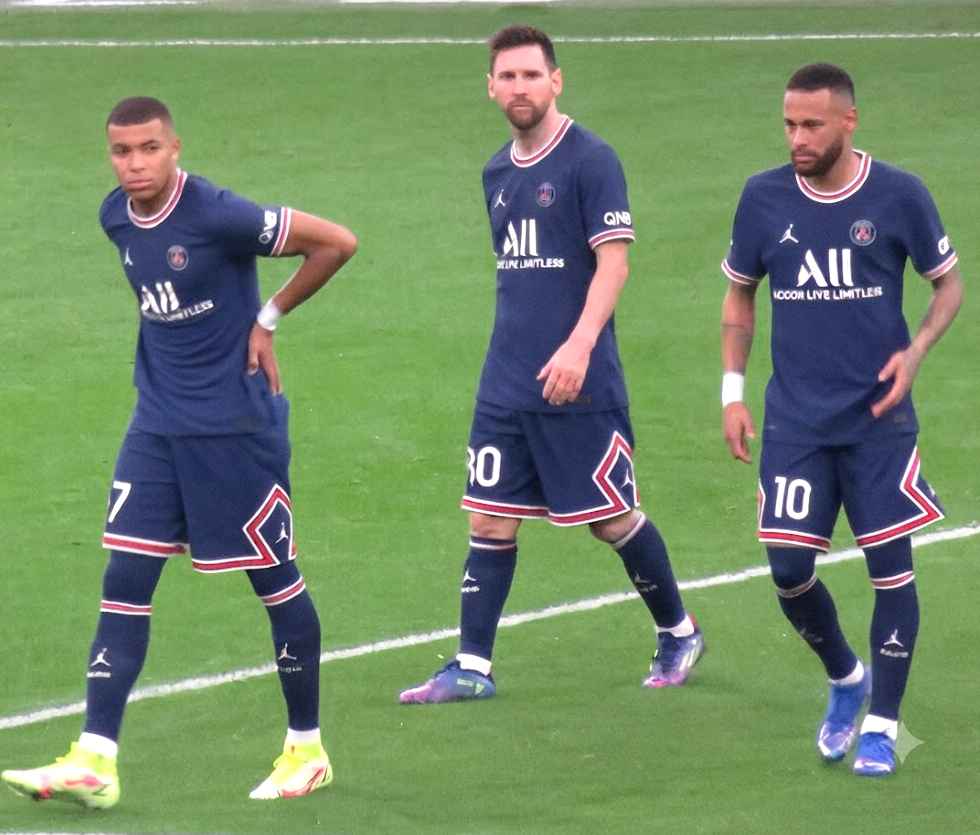 the
winter and summer Olympics are seen on TV all over
the world.
the
winter and summer Olympics are seen on TV all over
the world.
World
Cup Soccer 2026, or futbol as the purists label it,
has added new dimensions to the popularity of sports
with its focus on more extensive world participation.
Stadiums all over North America sold out to a truly
representative world of die-hard fans. Despite the
extraordinary contributions of Lionel Messi, Spain
defeated Argentina. There was video footage of cities
in Spain showing hundreds of thousands of Spanish-speaking
peoples everywhere cheering, while Donald Trump, as
he presented the championship trophy to the winning
team, and the head of FIFA were booed loudly.