In the last issue of
Arts
& Opinion, I noted the
conspiratorial history of Russian rule, my alarming
business experience in Russia in dealing with
the contemporary version of the former KGB, and
the continuance of conspiratorial propaganda success
that Putin has had over Trump. But in spite of
that during my business visit, I experienced another
aspect of Russian tradition: its extraordinary
contribution to art and culture.
At the time of the Russian business visit,
my chief career was that of professor and Performing
Arts director at Pace University in New York.
I taught Shakespeare, classical Greek, and courses
in each period of English lit. I also taught music.
I had been a jazz player since childhood and a
producer of the music in my own company. I had
recently published a book on the titanic bebop
trumpet talent of Clifford
Brown, and, although a monumental
artist, definitely not a celebrity musician. Imagine
my amazement when the young deejays of Russian
radio that I was coaching in Moscow said they
had already read my recently published book, and
began scatting Brown’s improvisational lines from
his very esoteric compositions. I asked them where
in the world they had learned this music and they
responded that they had long ago obtained cheap
tape radio and recorder equipment and for years
constantly tuned into jazz Voice of America broadcasts
(forbidden by the Communists) in mostly studio
apartments with one light bulb.
 As
a performing arts producer, I was able to present
opera companies, jazz and symphonic groups, rising
stand-up comics, and modern dance and ballet companies.
In Moscow I had met the director of the revived
St. Petersburg ballet. He had just signed the
Bolshoi star ballerina Galena Metzenseva and was
searching for international bookings. I arranged
a five city tour for them with the premier American
performance to be held at my Pace New York theater.
I had presented virtually every celebrity dance
company in my series but this recital was different.
During my usual supervisory backstage rehearsal
presence, I became transfixed by the leaping brilliance
of the dancers and their unusual physiques. Their
necks were so long that they looked almost extraterrestrial.
Their arms and legs were no wider than sticks
and they were all absurdly thin. Metzenseva had
been performing for years but her sheer energy
and talent eclipsed that of anyone I had seen.
I thought no wonder the Kirov and Bolshoi companies
enjoyed an uncontested centuries-old dominance
in dance.
As
a performing arts producer, I was able to present
opera companies, jazz and symphonic groups, rising
stand-up comics, and modern dance and ballet companies.
In Moscow I had met the director of the revived
St. Petersburg ballet. He had just signed the
Bolshoi star ballerina Galena Metzenseva and was
searching for international bookings. I arranged
a five city tour for them with the premier American
performance to be held at my Pace New York theater.
I had presented virtually every celebrity dance
company in my series but this recital was different.
During my usual supervisory backstage rehearsal
presence, I became transfixed by the leaping brilliance
of the dancers and their unusual physiques. Their
necks were so long that they looked almost extraterrestrial.
Their arms and legs were no wider than sticks
and they were all absurdly thin. Metzenseva had
been performing for years but her sheer energy
and talent eclipsed that of anyone I had seen.
I thought no wonder the Kirov and Bolshoi companies
enjoyed an uncontested centuries-old dominance
in dance.
Teaching my literature and music courses
at the university I was constantly referencing
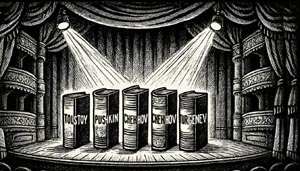
Russian writers and composers. Nobel Laureate
Ivan Pavlov once said that modern psychology had
not been served any better by a 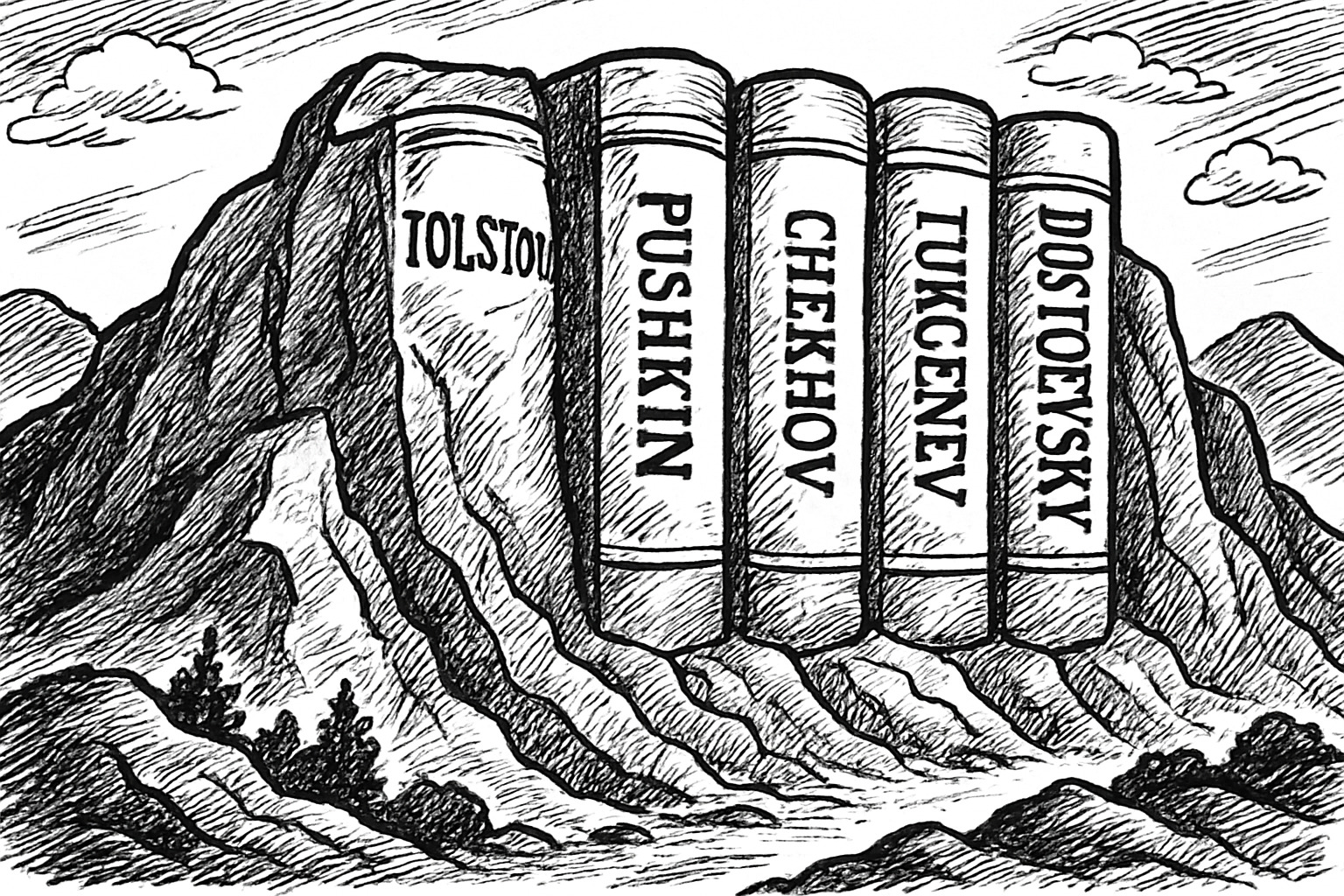 novelist
like Dostoevsky; and no finer epic has been written
then Tolstoy’s War and Peace. In Russia, no writer
was revered more than Pushkin. And in drama, no
figure was being revived everywhere more than
Chekhov. In music, I found myself playing more
Tchaikovsky for the students in teaching symphonic
melodic construction despite their more considerable
fondness for Rimsky-Korsakov. At NBC symphony
orchestra concerts in Carnegie Hall the legendary
Arturo Toscanini conducted Mussorgsky’s Pictures
at an Exhibition more often than he referenced
major European masters. The biggest surprise in
class came when we listened to Borodin’s Polovtsian
Dances and discovered that memorable American
pop hits ( “Stranger in Paradise” “Baubles, Bangles
and Beads” were compositions by the internationally
famous chemist who wrote music ‘on Sunday’ as
a respite from the language of chemistry); he
was truly a renaissance man. Torrie Zito, who
was Tony Bennett’s top arranger, told me in an
interview that his chief harmonic inspiration
came from the complex notator/composer Alexander
Scriabin. And most jazz composers that I’ve met
say that no classical writer has influenced them
more than Igor Stravinsky.
novelist
like Dostoevsky; and no finer epic has been written
then Tolstoy’s War and Peace. In Russia, no writer
was revered more than Pushkin. And in drama, no
figure was being revived everywhere more than
Chekhov. In music, I found myself playing more
Tchaikovsky for the students in teaching symphonic
melodic construction despite their more considerable
fondness for Rimsky-Korsakov. At NBC symphony
orchestra concerts in Carnegie Hall the legendary
Arturo Toscanini conducted Mussorgsky’s Pictures
at an Exhibition more often than he referenced
major European masters. The biggest surprise in
class came when we listened to Borodin’s Polovtsian
Dances and discovered that memorable American
pop hits ( “Stranger in Paradise” “Baubles, Bangles
and Beads” were compositions by the internationally
famous chemist who wrote music ‘on Sunday’ as
a respite from the language of chemistry); he
was truly a renaissance man. Torrie Zito, who
was Tony Bennett’s top arranger, told me in an
interview that his chief harmonic inspiration
came from the complex notator/composer Alexander
Scriabin. And most jazz composers that I’ve met
say that no classical writer has influenced them
more than Igor Stravinsky.
So there you have it. It is difficult
to equate the European artistic output in the
last 200 years without putting Russia at the top
of the list.
And yet, although Russia exports sports
to the world’s events and chess players to the
Grandmaster tournaments, Putin and his cohorts
put politics ahead of culture on all fronts preferring
to fight war in Ukraine, and to send threatening
drones to former colonies in Eastern Europe --
damn the great Russian cultural heritage; the
age-old conspiratorial KGB mentality trumps all.
As
far as the west is concerned, one of the biggest
challenges of this intransigent Russian habit
is dealing with the issue of negotiations. And
that is the reason I wrote this essay. A recent
analysis of its skullduggery in International
diplomacy mirrors the experience I described above
in my Russian trip. Valerii Zaluzhnyi, the Ukrainian
ambassador to the United Kingdom and former Armed
Forces of Ukraine commander-in-chief writes presciently
and brilliantly in an essay dubbed “Words are
Weapons” about Russian diplomatic conspiracy.
My micro experiences
of the hidden agenda the Russians had during my
trip is given a macro perspective by Zaluzhnyi
: “As Ukraine defends its existence, we face an
opponent who sees diplomacy not as dialogue but
as a natural extension of its war effort. Russia’s
negotiators, like its generals, fight to exhaust,
confuse and divide. Their aim is not peace but
delay, not compromise in pursuit of accord but
conquest through deception.”
It is this
practice in the meetings between Trump and Putin
that these words can be seen as the precise strategy
that Zaluzhnyi has described. What is crucial
here is Trump’s inability to combat this strategy
because he hasn’t the faintest clue that Putin’s
possesses vastly superior rhetorical skills, he
is a master at setting the agenda via sidetracking
and purposeful confusion, all with the nefarious
aim of using these meetings to delay, divide and
conquer. Trump naively thinks he can bring about
peace through negotiations as many European leaders
also pursue the traditional meaning of the process.
Trump
is not alone in his failure to understand how
to combat perverted persuasive rhetoric. As far
back as the first Greek democratic assemblies
in the 5th century B.C., it quickly became apparent
that the best rhetoricians would have a huge advantage
in government debate.
I have written
about the insidious history of scurrilous rhetoric
and the evil it has caused in the history of governments
and societies. I will soon return to the topic
because this huge problem has never been solved.
COMMENTS
Laureen
Once again, a formidable piece on Russia’s
unchallenged history in classical music and dance.
Bravo!