|
|
ON THE ROAD IN PERU
THE RENT-A-CAR WAY
by

ROBERT J. LEWIS

PREP
TALK
Of the 340
or so disembarking passengers, we were the only ones renting
a car (Fiat Uno) at Lima’s International Airport.
I was surprised but not surprised. Without exception,
the guide books to Peru either quietly or explicitly counsel
against it, citing a litany of possible negative events,
the majority of which happen in our own big city backyards
everyday.
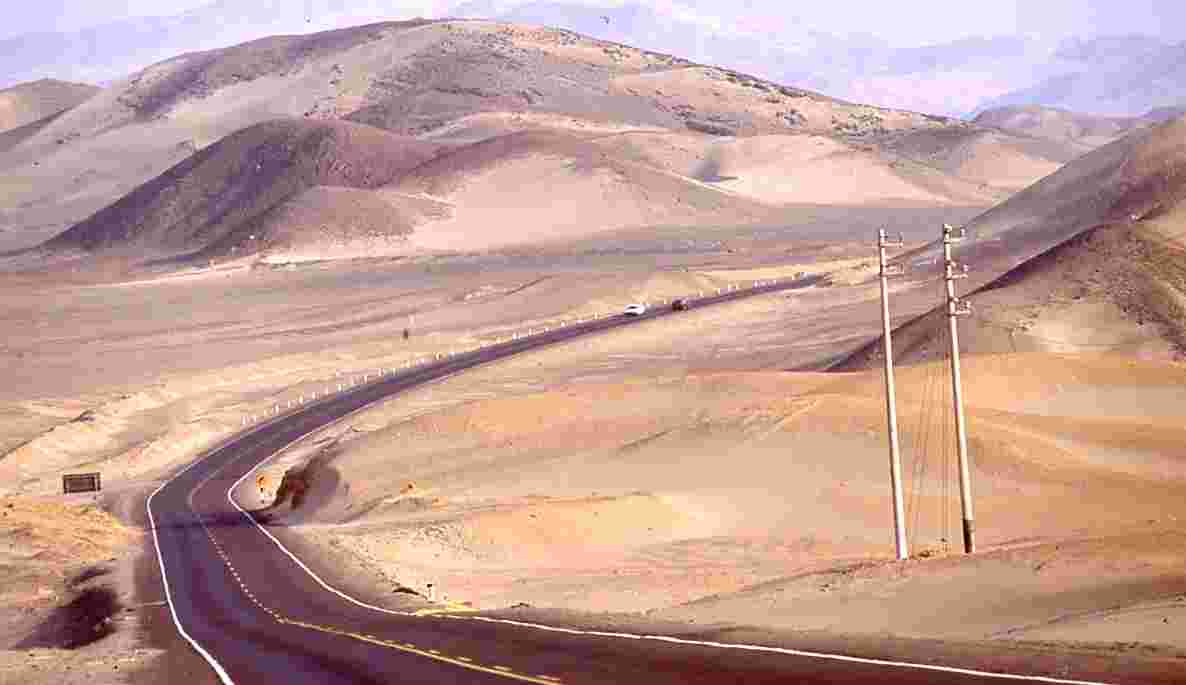 Spectacular
ruins and wonderfully preserved Spanish colonial architecture
notwithstanding, the true story of Peru is the road. From
the majestic Atacama desert in the south, to the dune
panoramas between Lima and Trujillo in the near north,
to the impossibly fecund Thai-green Andes in the Cusco
region, to the 4,000 meter high Lake Titicaca and the
fascinating life that generates from it, Peru, with all
due respect to Spain and Italy, is arguably one of the
most beautifully varied countries on the planet. And the
way to see it is by car. Exercising normal caution, there
is no good reason not to rent a car and take to the much
improved road network up and down Peru’s Pan-American
Highway and the many arteries that worm their way inland
up into the awesome Andes. Spectacular
ruins and wonderfully preserved Spanish colonial architecture
notwithstanding, the true story of Peru is the road. From
the majestic Atacama desert in the south, to the dune
panoramas between Lima and Trujillo in the near north,
to the impossibly fecund Thai-green Andes in the Cusco
region, to the 4,000 meter high Lake Titicaca and the
fascinating life that generates from it, Peru, with all
due respect to Spain and Italy, is arguably one of the
most beautifully varied countries on the planet. And the
way to see it is by car. Exercising normal caution, there
is no good reason not to rent a car and take to the much
improved road network up and down Peru’s Pan-American
Highway and the many arteries that worm their way inland
up into the awesome Andes.
TO BE CONSIDERED
BEFORE RENTING FROM LIMA
- - The
guide books offer, at best, only cursory evaluation
of Peru’s gorgeous landscape because almost no
one rents. 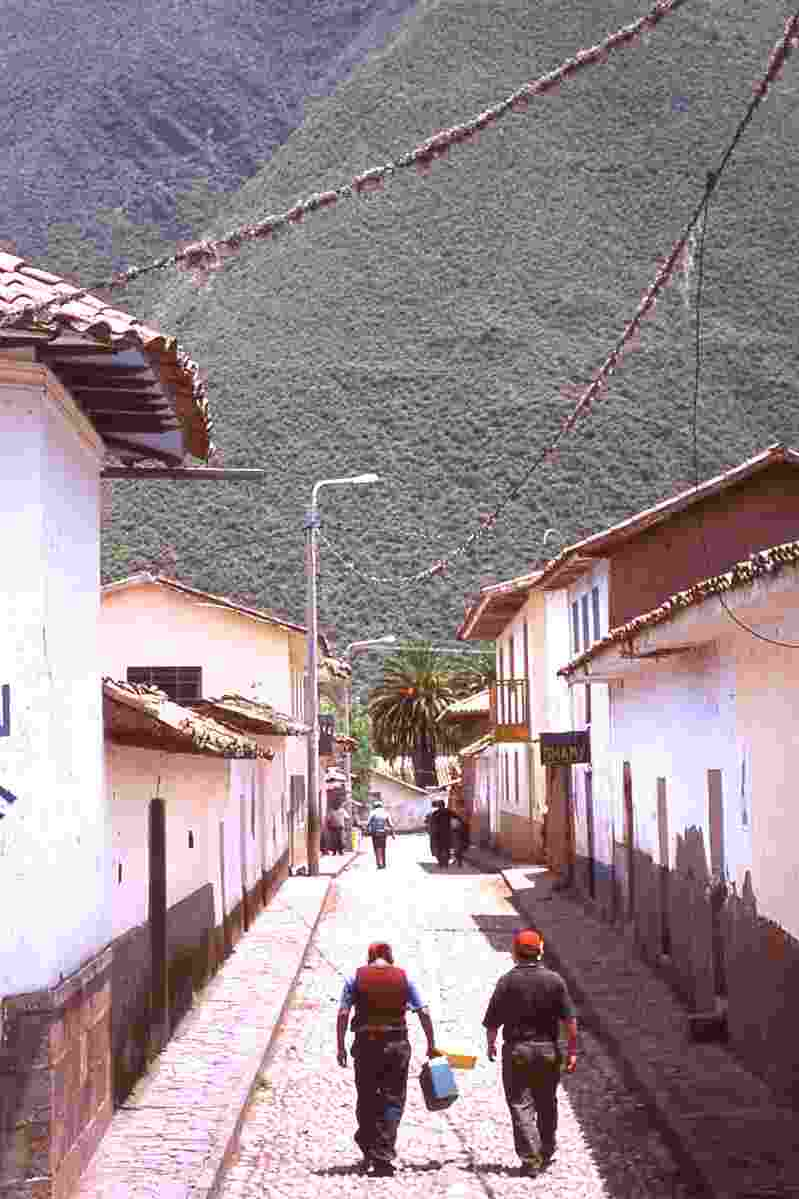
- - The
guide books offer no practical instruction on how to
get in and out of Lima, which is not only essential
to your trip but to the rest of your life. Without mincing
words, Lima -- less Miraflores and a few other highly
recommended areas -- is the anus of Peru. To the tune
of eight million, the wretched of the earth are gathered
here, living in squalor the likes of which I haven’t
seen since India. If we are comfortable in India, it’s
because its poor have been ingeniously pacified (anaesthetized)
by religion and the promise of an afterlife.[1]
There’s no such hocus pocus in Lima where the
disenfranchised live in windowless boxes plunked on
the hard rock and sand of the surrounding, desiccated
hillsides, where running water and electricity are in
no supply -- and the crime rate is alarming. Never forget
that the nearness of your shoulder bag is the song they
can’t refuse – that if El Dorado is a myth
come to earth, you’re it.
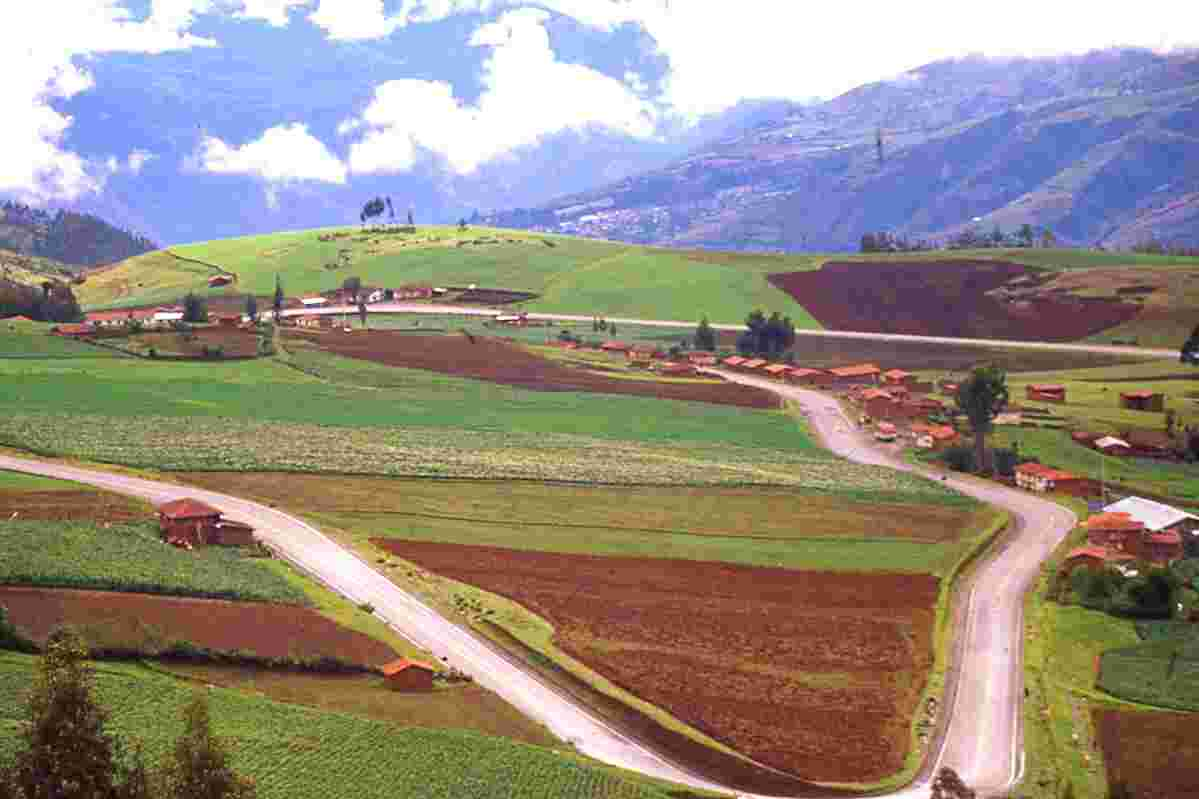 Contrary
to your reading of the map, when leaving Lima’s
airport to go south, do not take Av. Peru for
what seems like the shortest route to the Pan-American
Highway. Instead, take Elmer Faucet to Av. La Marina
to Javier Prado (about 30 kms) which connects to the
Pan-American South. If you’re heading north, take
Av. Tomas Valle to the Pan North (about 5 kms) . From
either direction, passing through Lima, you connect
to either the North or South by taking the Via de Evitamiento
(like the French éviter = to avoid).
No matter how deep is your atheism, a mistake here will
have you reciting prayers you didn’t know exist. Contrary
to your reading of the map, when leaving Lima’s
airport to go south, do not take Av. Peru for
what seems like the shortest route to the Pan-American
Highway. Instead, take Elmer Faucet to Av. La Marina
to Javier Prado (about 30 kms) which connects to the
Pan-American South. If you’re heading north, take
Av. Tomas Valle to the Pan North (about 5 kms) . From
either direction, passing through Lima, you connect
to either the North or South by taking the Via de Evitamiento
(like the French éviter = to avoid).
No matter how deep is your atheism, a mistake here will
have you reciting prayers you didn’t know exist.
- - You
have to be comfortable driving a standard transmission,
ideally with some European-Alpine experience. And when
the travelling day is done, without exception, park
your car in either your hotel’s private parking
(la cochera), or a secure, nearby cochera.
- - It will help immensely if you can speak a little
Spanish, at least enough to ask for directions and catch
the response. Signs are practically non-existent in
Peru and you’ll be dependent on well intended
instruction from a very hospitable and helpful people.
- - There
are tolls everywhere in Peru, relatively expensive compared
to everything else. If in the local markets, a three-course
meal will set you back all of one Canadian dollar, tolls
average two bucks for every 75 kms. The system is unique
and labor effective: you’re charged on all roads
leading away from Lima, which are free in the opposite
direction.
ON THE ROAD – EL SUR
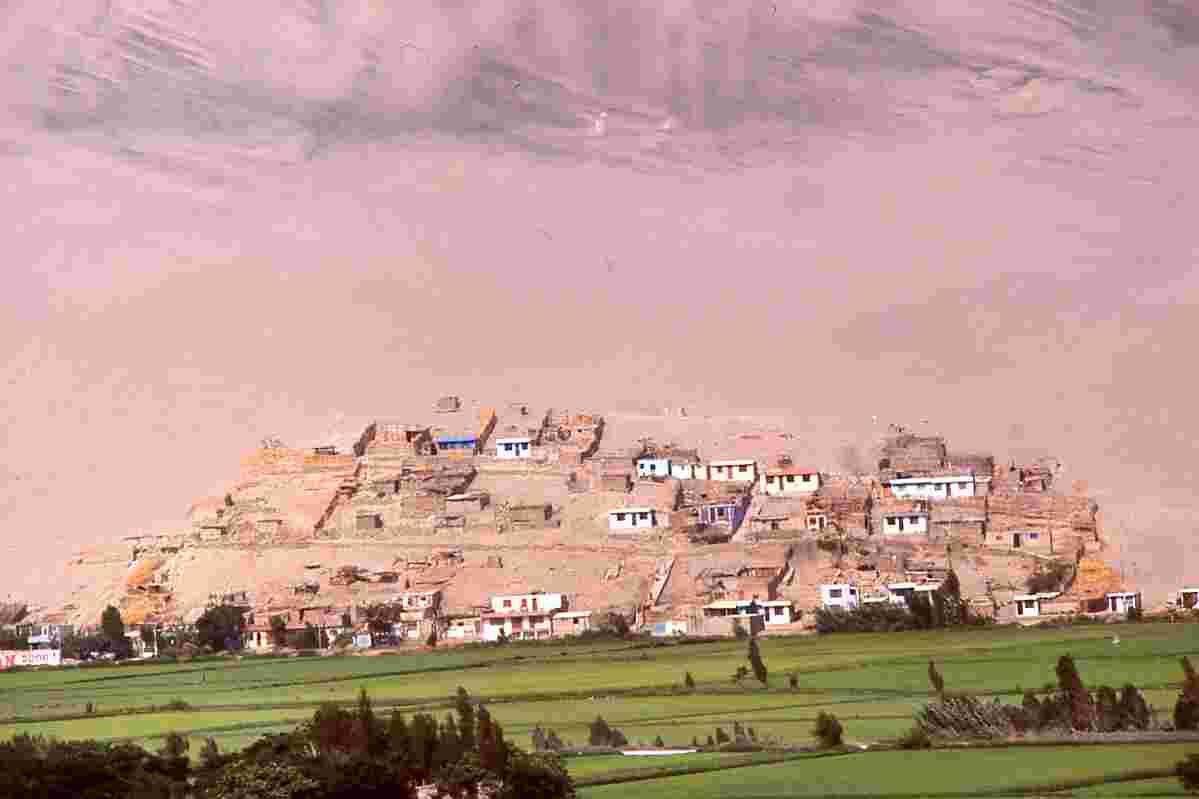 We
logged 7,000 kms in just under a month. Leaving the
capital going south, you’ll immediately encounter
mostly empty desert landscape, some of which is miraculously
under cultivation. If this, the Atacama, is your first
desert, you’ll be impressed. But it doesn’t
compare to the Chilean Atacama, nor for that matter
the Sahara in the Touggart-El Oued region of Algeria.
The former desert is so dry and utterly lifeless, that
after 4,000 kms there wasn’t a single squashed
insect on our windshield. Furthermore, unlike the eerie,
other worldly route from San Pedro de Atacama to Antofagasta
in Chile, the flattish desert region south of Lima simply
isn’t ugly enough to be fascinating. But from
time to time, you’ll light upon some excellent
desert moments as the road winds its way through high
dunes, picking up the sea at the 600 km point at Puerta
Inca all the way to Camana, 855 kms. Evaluating this
road (always on a scale of one to three) this latter
section merits a 2.5 while the first 600 kms a 1.8.
Bear in mind the universal tendency to fairly or unfairly
compare one’s immediate landscape to what one
has just seen, which is probably why the entire world
outside of Canada strikes me as extraordinarily beautiful. We
logged 7,000 kms in just under a month. Leaving the
capital going south, you’ll immediately encounter
mostly empty desert landscape, some of which is miraculously
under cultivation. If this, the Atacama, is your first
desert, you’ll be impressed. But it doesn’t
compare to the Chilean Atacama, nor for that matter
the Sahara in the Touggart-El Oued region of Algeria.
The former desert is so dry and utterly lifeless, that
after 4,000 kms there wasn’t a single squashed
insect on our windshield. Furthermore, unlike the eerie,
other worldly route from San Pedro de Atacama to Antofagasta
in Chile, the flattish desert region south of Lima simply
isn’t ugly enough to be fascinating. But from
time to time, you’ll light upon some excellent
desert moments as the road winds its way through high
dunes, picking up the sea at the 600 km point at Puerta
Inca all the way to Camana, 855 kms. Evaluating this
road (always on a scale of one to three) this latter
section merits a 2.5 while the first 600 kms a 1.8.
Bear in mind the universal tendency to fairly or unfairly
compare one’s immediate landscape to what one
has just seen, which is probably why the entire world
outside of Canada strikes me as extraordinarily beautiful.
 From
Camana, the road climbs uneventfully – again compared
to the eye opening southern version in Chile (Arica
through Putre to the Bolivian border) -- to Arequipa,
2,600 meters high. But from Arequipa to Chivay (3,800
meters), and a visit to the must-see Colca Valley, you’ll
discover the essential pulchritude and lush verdancy
of the Andes on an aesthetic scale and grandeur with
which very few places on the planet can compete. From
Camana, the road climbs uneventfully – again compared
to the eye opening southern version in Chile (Arica
through Putre to the Bolivian border) -- to Arequipa,
2,600 meters high. But from Arequipa to Chivay (3,800
meters), and a visit to the must-see Colca Valley, you’ll
discover the essential pulchritude and lush verdancy
of the Andes on an aesthetic scale and grandeur with
which very few places on the planet can compete.
From Arequipa
to Chivay (where you access the Colca) you arrive at
a junction (at 100 kms) that leaves you about 90 kms
from Chivay. The first 25 kms of this road are dirt,
with lots of sharp rocks. In our small car, it was barely
doable as we slowed down to 15 kms/hour, always trying
to keep to the smoother side. The remaining 65 kms are
mostly newly paved. This entire route however, fog and
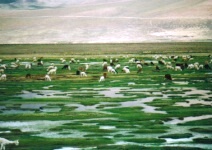
mist permitting, is enchanted, leavened with llamas
and alpacas grazing on grass and drinking from glacial
pools only the gods could have provided for. The journey
from Chivay to the Colca Canyon’s Condor Lookout
will run you about 100 kms, but after Yanqui –
an atmospheric town with a quaint plaza, 10 kms past
Chivay – the road turns horrible and we had to
stop. Our criterion for risking dirt roads is the absolute
fear and dread of having to change a flat.
From
Chivay, back to the junction, the excellent road to Juliaca
(4 hours) rates a 2.8 with many extended 3 sections. Don’t
leave yourself short on film here, or for the next 1,200
kms for that matter. Parts of this road rank with anything
I have ever seen, especially around the ¾ point
where we happened upon an exquisitely shaped, pristine
lake surrounded by smooth, pastel green mountains that
you can’t imagine being bettered by Lake Titicaca.
 The
100 kms from Juliaco to Puno are surprisingly lackluster,
especially in light of what has just preceded. In Juliaca,
you’ll be taken aback by a preponderance of mostly
motor drawn rickshaws. By this time, you’ll have
realized that the rules of the road don’t exist
in Peru: heavy traffic does not necessarily keep to
the right lane while the vehicle in front of you does
as it pleases. From time to time you’ll find yourself
driving on whatever side of the road is most effective,
swerving in and out of traffic as if you were in India.
However disconcerting this sounds, unless you are latently
homicidal or long for an extended period of exotic incarceration,
you will make that swerve on each and every occasion.
Juliaca is a dirty city under extensive renovation,
with cratered roads, whose main streets are lined with
antiquated North American sewing machines for sale,
the fact of which merits an economic digression. Peru,
at $5,600 per capita income, is a major garment manufacturer,
whose cheap labor is being undercut by the even cheaper
labor in China. So in order not to lose the remaining
threads of whatever competitive advantage remains, Peru
is obliged to buy up western discards at currency-friendly
prices. The
100 kms from Juliaco to Puno are surprisingly lackluster,
especially in light of what has just preceded. In Juliaca,
you’ll be taken aback by a preponderance of mostly
motor drawn rickshaws. By this time, you’ll have
realized that the rules of the road don’t exist
in Peru: heavy traffic does not necessarily keep to
the right lane while the vehicle in front of you does
as it pleases. From time to time you’ll find yourself
driving on whatever side of the road is most effective,
swerving in and out of traffic as if you were in India.
However disconcerting this sounds, unless you are latently
homicidal or long for an extended period of exotic incarceration,
you will make that swerve on each and every occasion.
Juliaca is a dirty city under extensive renovation,
with cratered roads, whose main streets are lined with
antiquated North American sewing machines for sale,
the fact of which merits an economic digression. Peru,
at $5,600 per capita income, is a major garment manufacturer,
whose cheap labor is being undercut by the even cheaper
labor in China. So in order not to lose the remaining
threads of whatever competitive advantage remains, Peru
is obliged to buy up western discards at currency-friendly
prices.
Your
first rendezvous with Lake Titicaca begins in Puno. You’ll
stay there for practical, not aesthetic reasons: access
to Lake Titicaca’s many islands (most of which are
worth a visit), and the unforgettable drive around the
southern swing of the lake to the 2-star Bolivian town
of Copacabana, which is 10 kms across the border.
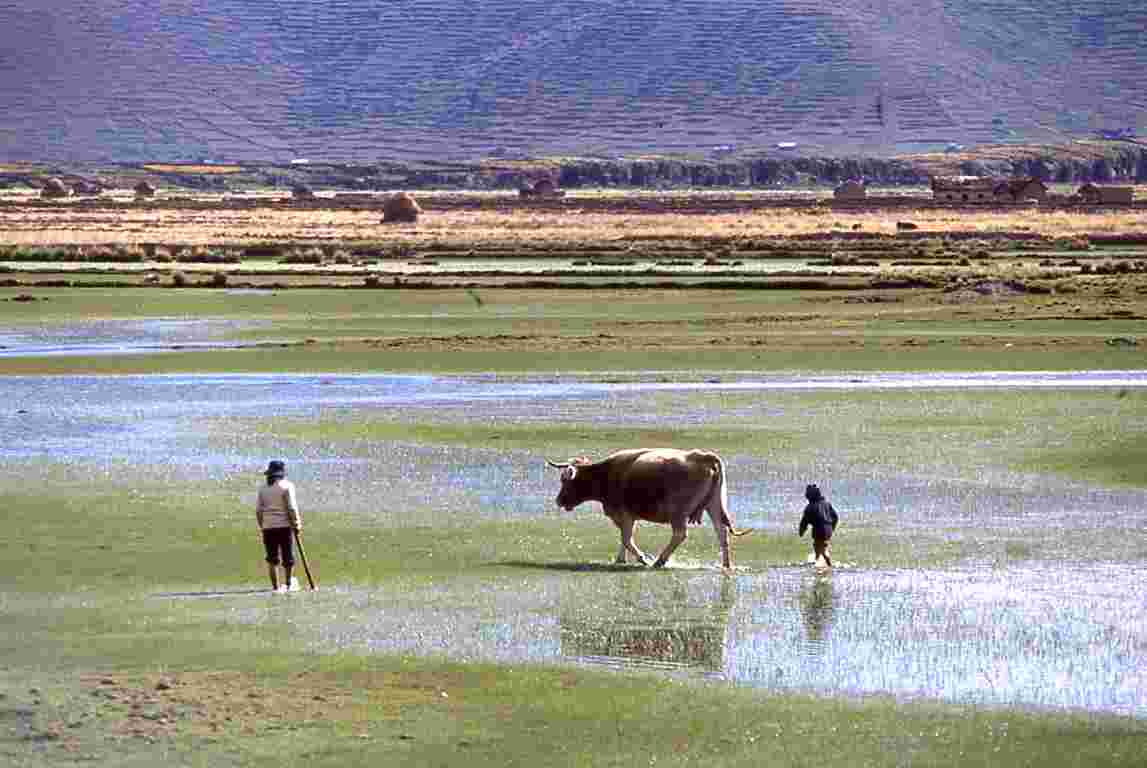 Lake
Titicaca, at 3,800 meters, is not only the world’s
highest navigable lake, but is as large as Switzerland.
Its hypnotic, ink-blue surface is impenetrable, and beguiling
horizon as sharp as the edge of a knife. And while our
textbooks teach us from our earliest years that the earth
is round, my experience on Titicaca reminded me that science
cannot explain everything. Lake
Titicaca, at 3,800 meters, is not only the world’s
highest navigable lake, but is as large as Switzerland.
Its hypnotic, ink-blue surface is impenetrable, and beguiling
horizon as sharp as the edge of a knife. And while our
textbooks teach us from our earliest years that the earth
is round, my experience on Titicaca reminded me that science
cannot explain everything.
From
that very first glimpse that is forever etched in my
mind, the lake’s razored horizon was so riveting,
I knew I had to go there and see it in the flesh, so
with a guide and small boat, we ventured out one brisk
morning and sure enough, as if there were never any
doubt, we rowed right up to the edge of what we knew
not, where I dared to look over -- and found myself
gazing into the very face of the Godhead. My boatman
also looked over but did not see what I saw, and what
he said as he disappeared over the edge I shall never
repeat.
Like
a benevolent deity, the lake is revered for the agriculture
it sustains and the communal life that hasn’t changed
in centuries. The region’s unhurried rhythms are
so natural, I would often find myself wondering why some
cultures advance technologically while others don’t,
and provisionally concluded 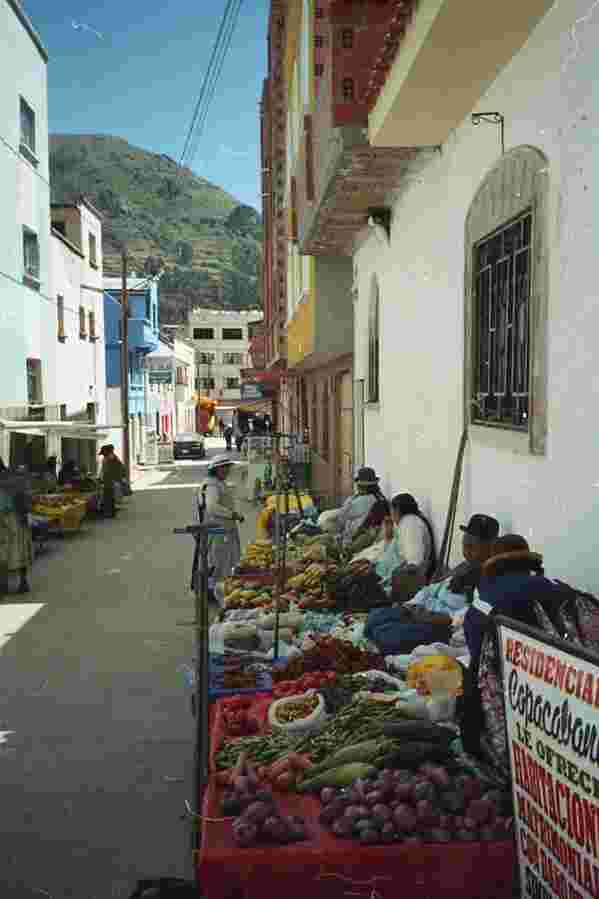 that
the fortuitous presence of an extraordinary genius can
make all the difference. It’s now a couple of months
since I’ve been back in my quotidian, but from time
to time, as if reliving a dream that cannot survive the
morning’s first light, I catch myself harkening
back to that idyllic, pastoral tempo that unfolds around
Lake Titicaca, and I realize how privileged I felt to
have been given the extraordinary opportunity to bear
witness to a spirit and civilization that does not compare
to the fast pace and cacophony of my own, and cannot help
but to wonder if the offspring of genius – progress
-- is a blessing or a curse. that
the fortuitous presence of an extraordinary genius can
make all the difference. It’s now a couple of months
since I’ve been back in my quotidian, but from time
to time, as if reliving a dream that cannot survive the
morning’s first light, I catch myself harkening
back to that idyllic, pastoral tempo that unfolds around
Lake Titicaca, and I realize how privileged I felt to
have been given the extraordinary opportunity to bear
witness to a spirit and civilization that does not compare
to the fast pace and cacophony of my own, and cannot help
but to wonder if the offspring of genius – progress
-- is a blessing or a curse.
Juliaca to
Cusco (350 kms) constitutes yet another monumental route.
The first 70 kms of this paved, but pot-holed road take
you through velvety, undulating mountains that leave you
convinced that there is indeed a place reserved for heaven
on earth, and that the deity you’ve been looking
for is just around the next turn. From km 150 to 225,
the landscape turns Alpinish, with cultivated mountain
sides running down into luxuriant valleys that feature
both thatched and terracotta roofing. As if providing
the perfect solution to urban congestion, the villages
and their green spaces, over a 75 km stretch, are seamlessly
connected, eventually surrendering to the higher mountains
of the Cusco region. This heavenly highway rates a 2.7
with many 3 sections.
From
Cusco, there are many small side trips, all of which are
breathtaking. Leaving the city northward, you visit the
Inca ruins at Sacayhuaman, where you’ll discover
first hand why the Incas are regarded as history’s
greatest stone cutters.  From
there, this lush-with-life road that recalls Old Europe
twists its way to the ruins of Pisaq (about 45 kms), cul
de sac-ing half way up a mountain. It would be hard to
find a more satisfying view: everything is ‘here,
there, and everywhere.’ Looking up, the eye follows
delightful pathways leading to three separate sites of
well preserved ruins. Straight ahead lies an exquisitely
cut terrace that elegantly cascades to the valley below,
each tablet velvet green and as smooth as fur. Looking
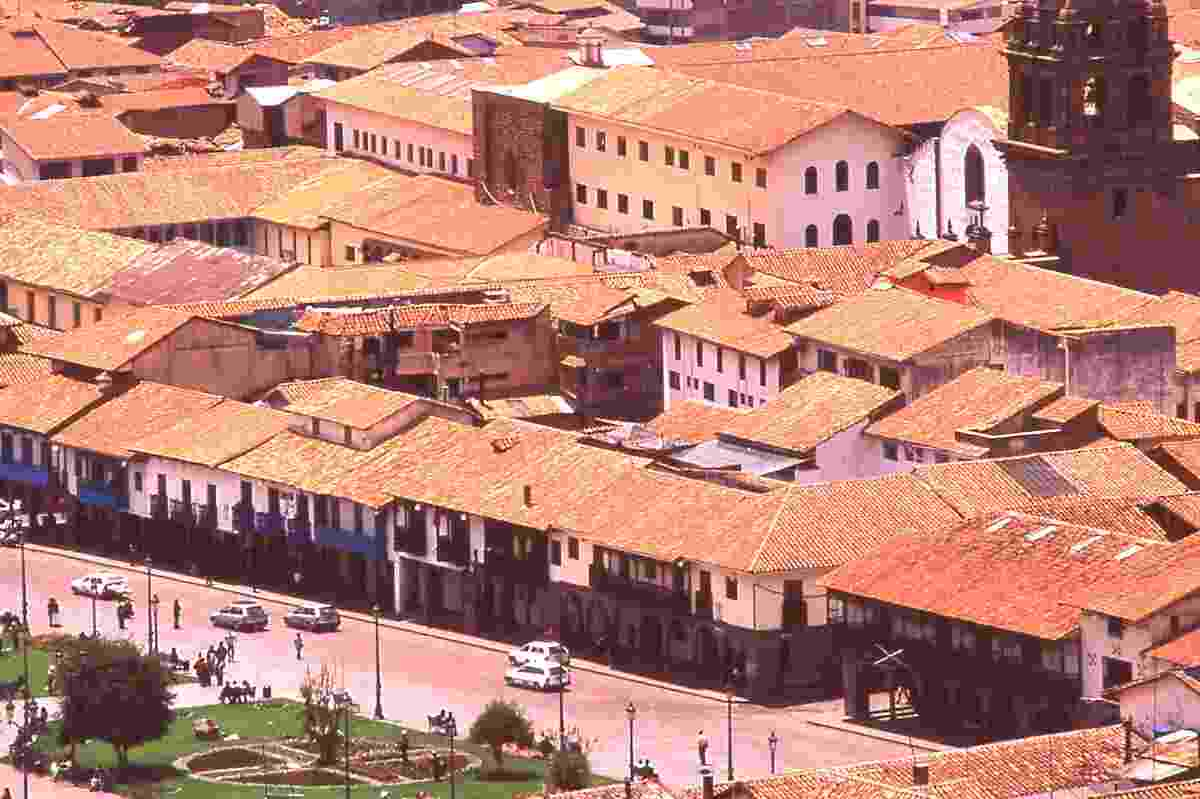
down, the eye is treated to a Braque-like tableau of sun
baked terracotta roofs backed up by deep green, flourishing
mountain flanks. If Machu Pichu can beat this, show me. From
there, this lush-with-life road that recalls Old Europe
twists its way to the ruins of Pisaq (about 45 kms), cul
de sac-ing half way up a mountain. It would be hard to
find a more satisfying view: everything is ‘here,
there, and everywhere.’ Looking up, the eye follows
delightful pathways leading to three separate sites of
well preserved ruins. Straight ahead lies an exquisitely
cut terrace that elegantly cascades to the valley below,
each tablet velvet green and as smooth as fur. Looking
down, the eye is treated to a Braque-like tableau of sun
baked terracotta roofs backed up by deep green, flourishing
mountain flanks. If Machu Pichu can beat this, show me.
 Continuing
from Pisaq to Urubumba is another princely 2.6 drive,
and from Urubumba going south, at the 10 km point, the
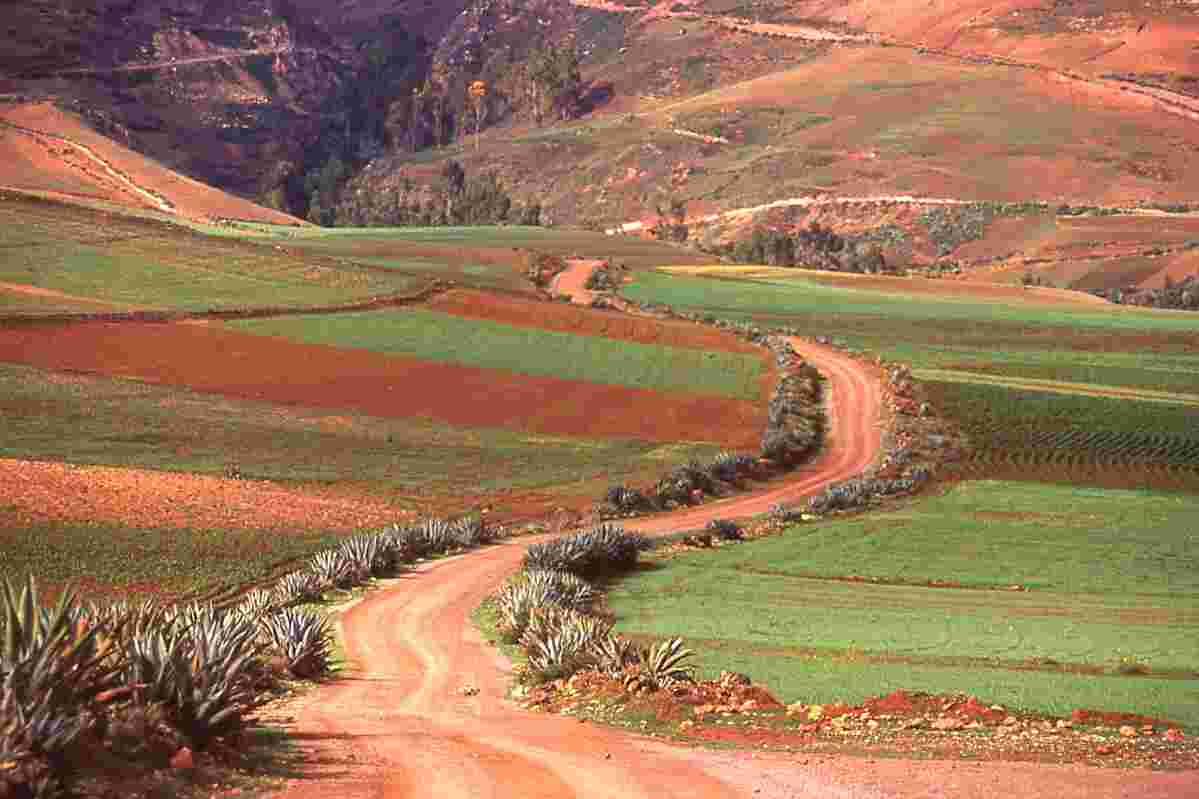
road forks right to Maras, where a difficult 7 km, 3-star
dirt road cuts through preternaturally serene, sienna-brown,
Basque-red landscape that recalls Andalusia (Antequera
region), conducting you into a brawny, bouldered gorge
where an implausibly extensive cache of salt terraces
reside in their luminous, cubist splendor. Once again,
don’t leave yourself short of film here. From
Maras back to the main road, a less difficult but quietly
awe-inspiring 10 km dirt road drops you off at Moray,
another worthwhile site. Continuing
from Pisaq to Urubumba is another princely 2.6 drive,
and from Urubumba going south, at the 10 km point, the
road forks right to Maras, where a difficult 7 km, 3-star
dirt road cuts through preternaturally serene, sienna-brown,
Basque-red landscape that recalls Andalusia (Antequera
region), conducting you into a brawny, bouldered gorge
where an implausibly extensive cache of salt terraces
reside in their luminous, cubist splendor. Once again,
don’t leave yourself short of film here. From
Maras back to the main road, a less difficult but quietly
awe-inspiring 10 km dirt road drops you off at Moray,
another worthwhile site.
If you decide
to take the train from Ollantaytambo instead of Cusco
to Machu Pichu, the route and the town’s authentic
charm are the reasons. 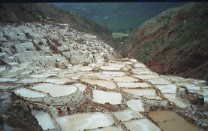
Machu Pichu,
even at a $105 Can/person, didn’t disappoint and
ranks, along with Iguazu Falls, as the single most inspiring
site I have ever witnessed.
The steep
ascent from Cusco through Abancay to Nazca takes 12 hours
and should be done in two days. On a newly paved, serpentine
highway from Cusco to Abancay you’ll climb to 4,500
meters, but you’re in the tropics, so instead of
snow you’ll be bowled over by the rice-paddy-green
 that
characterizes the vast cultivation that makes this one
of the richest agricultural areas in all of Peru. You’ll
pass mango groves such as you have never seen, as well
as papaya and banana plantations. This route merits a
3. that
characterizes the vast cultivation that makes this one
of the richest agricultural areas in all of Peru. You’ll
pass mango groves such as you have never seen, as well
as papaya and banana plantations. This route merits a
3.
Exiting Abancay,
you pass through a 150 mile gorge after which the road
gradually rises to 4,800 meters: that’s more than
half way up Everest making it one of the word’s
highest paved highways. The views are of the stuff that
make jaws drop, and at the very top, the mist-wreathed
landscape is lunar -- a cold mix of glacial detritus,
water puddles and stubble, and winter-garbed, Quecha-speaking
herdsman trying to eke out a living raising alpacas. At
Puquio (two long hours from Nazca), where the paved road
stops for about 5 horrendous kms, you descend to 500 meters
and a route that winds and twists its way through sun-lashed,
broke-back dry mountains that are weathered down into
small stone and sand as Nazca appears like a desert mirage
– which it isn’t. This long section rates
a 2.6, with 3s in the memorable upper reaches where the
gods reside and clouds cling to the dew and valleys below.
This
concludes the southern swing. The 1,800 kms from Chivay
to Lake Titicaca on through Cusco to Nazca must surely constitute
one of the world’s most extraordinary and varied long
drives where you’ll be hard pressed to find a single
dull kilometer.  And
I say this having driven far and high and wide(eyed). And
I say this having driven far and high and wide(eyed).
Heading north
from Lima to Trujillo (570 kms), the desert, surprisingly,
is more formidable than south of the capital. This section
merits a 2 with several 2.7 stretches: in particular from
Casco to Huarmey, an excellent stop-over town. On the
way to Trujillo, you have to persevere the degraded city
of Chimbote. At its best, the place is merely ugly, at
its worst, the rickshaw overrun outskirts are strewn with
garbage and attendant pickers and squatters. Chimbote
rudely reminds you that garbage disposal in Peru is not
a science. Seventy kilometers before Trujillo, one of
Peru’s many desert marvels begin. Like the Israelis,
the Peruvians make things grow out of sand. The result
boggles the disbelieving eye as you drive past rice paddies,
sugar cane fields and a poorly paid workforce at play
in the fields of the lord. Where the desert hasn’t
been tamed, you’ll observe heavy machinery cutting
deep and wide furrows out of the sand into which bags
of manure are spilled.
After Trujillo,
the desert begins to flatten out as do the Andes on your
right. Here, the true north begins, featuring more prosperous
towns and cities. The route from Trujillo to Chiclayo
is mostly flat and dull, the same from Chiclayo to Piura.
However 15 kms before Piura, scrub begins to appear, and
then low shrub and trees, and then a string of desert
defying villages lording over huts made of thatched bamboo.
If it’s Sunday, the locals will be vested in their
domingo best, trudging over the low dunes to
their simple places of worship. At Sulliana (45 kms north
of Piura), the road veers seaward to Talara where coconut
groves suddenly appear and disappear. For the next 50
kms, the road is mostly flat desert, eventually giving
way bare, shriven, hills that turn into low mountains
as the road hugs the coast through Mancora to Tumbes.
The drive from Chiclayo to Sulliana weighs in at 1.5,
from Sulliana to Tumbes a respectable 2.
There
are four inland routes between Lima and Tumbes, for which
we only had time for one. They say the Lima-La Oroya route
is the most spectacular. Less recommended is the road from
Chiclayo to Jaen. The route from Casma to Huaraz isn’t
paved, so we decided on the 2.7 route from Pacasmayo to
Cajamarca.
If it’s
variety you’re looking for, the road from the coast
to Cajamarca has it all. This four hour feast follows
a river that is fed by mountain runoff all year long.
The first 50 kms feature lush, labor intensive rice fields
and mango trees whose branches are bowed by the weight
of their bounty. On both sides of the river and the fertile
plain that hugs it are dry gorges and sun blistered cliff
sides, their muscled colors ranging from clay pot brown
to burnt sienna. 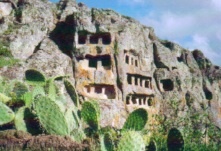 At
the 100 km point the road begins to ascend in earnest
as the mountains turn deliciously green. The climb rises
to 3,000 meters before dipping to 2,700 and the preciously
placed city of Cajamarca where you’ll be based. At
the 100 km point the road begins to ascend in earnest
as the mountains turn deliciously green. The climb rises
to 3,000 meters before dipping to 2,700 and the preciously
placed city of Cajamarca where you’ll be based.
Unfolding
like a pastoral is the impressive 10 km drive from Cajamarca
to the fabulous funerary tombs of Ventanillas de Otusco.
The tombs, and there are hundreds of them, have been dug
out of the mountain side whose lower flank features a
natural cactus garden and a charming path that leads you
to the sun-tempered, amber tinted cliff side.
I believe
the reason we travel (as opposed to going on vacation),
and endure hardship and risks real travel often entails,
is to expose the arbitrariness of the cultural imperatives
that inform our tastes and preferences. We willingly submit
to a kind of mental aerobics, painful mind-stretching
exercises that force us to accommodate and embrace worlds
very different than our own. And at the end of the voyage,
when the day is done, the suitcase unpacked, we’re
not so much wiser as more generous in our judgments and
sympathetic to the necessarily rude choices some people
have to make.
While every
region in the world can argue its case for beauty, some
places are categorically more pulchritudinous than others,
and Peru is one of them. There were at least 10 occasions
where I was simply overcome, emotionally surfeited by
the natural beauty of my surroundings; and when giving
thanks, that thought always included a nod to the irrational
side of me that had the good sense and temerity to throw
guidebook-caution to the wind and take to the road. For
unless you have a year or two and boots made for walking,
there’s no better way to unravel the marvels and
mystery of Peru than by car.
From its aesthetic
order to eating habits to market place customs, time spent
in Peru turned my conceits about life into questions I
would otherwise have never asked. For example, from dawn
until dusk, in the garb of its womenfolk, Peru is a festival
of colors and color combinations that makes no sense in
our part of the world but perfect sense in the context
of an ethos that unfolds as naturally and unconsciously
as our own – at least for the time being. Sadly,
irreversibly, the color paradigm that has been synonymous
with Peru for centuries is disappearing under the onslaught
of Western culture; and what excites the traveller today
will probably not exist 50 years from now -- outside the
museum.
Those of you
now persuaded to take to the incomparable highways and
byways of a country precariously perched between its present
and future, I promise that by the time you get to Lake
Titicaca, you will have already submitted my name for
apotheosis. Less than that, I await your feedback. Buen
viaje.
[1]Major
clarification required here. If my attitude toward India
invites the accusation of smugness and condescension,
there are significant facts on the ground that deserve
mention: women are not afraid to travel alone in India;
and (unlike Peru), one can walk the streets at night or
leave the car parked outside overnight without fear. Since
the merit of any religion is mostly determined by its
ability to persuade its membership to represent its morals
and ethics, Hinduism (and minority religions), as practiced
in India, is exponentially more effective than Catholicism
(and indigenous religions) as practiced in Peru, which
predicts I will return to India for a 3rd time, and not
Peru for a second.
|
|
|