Separating
truth from lies, sifting through exaggerated prose
and speeches, hearing public figures defy logic, and
searching through false claims from advertisers of
virtually every product imaginable, has become a necessary
routine for most of us. Persuasive rhetoric and related
communication 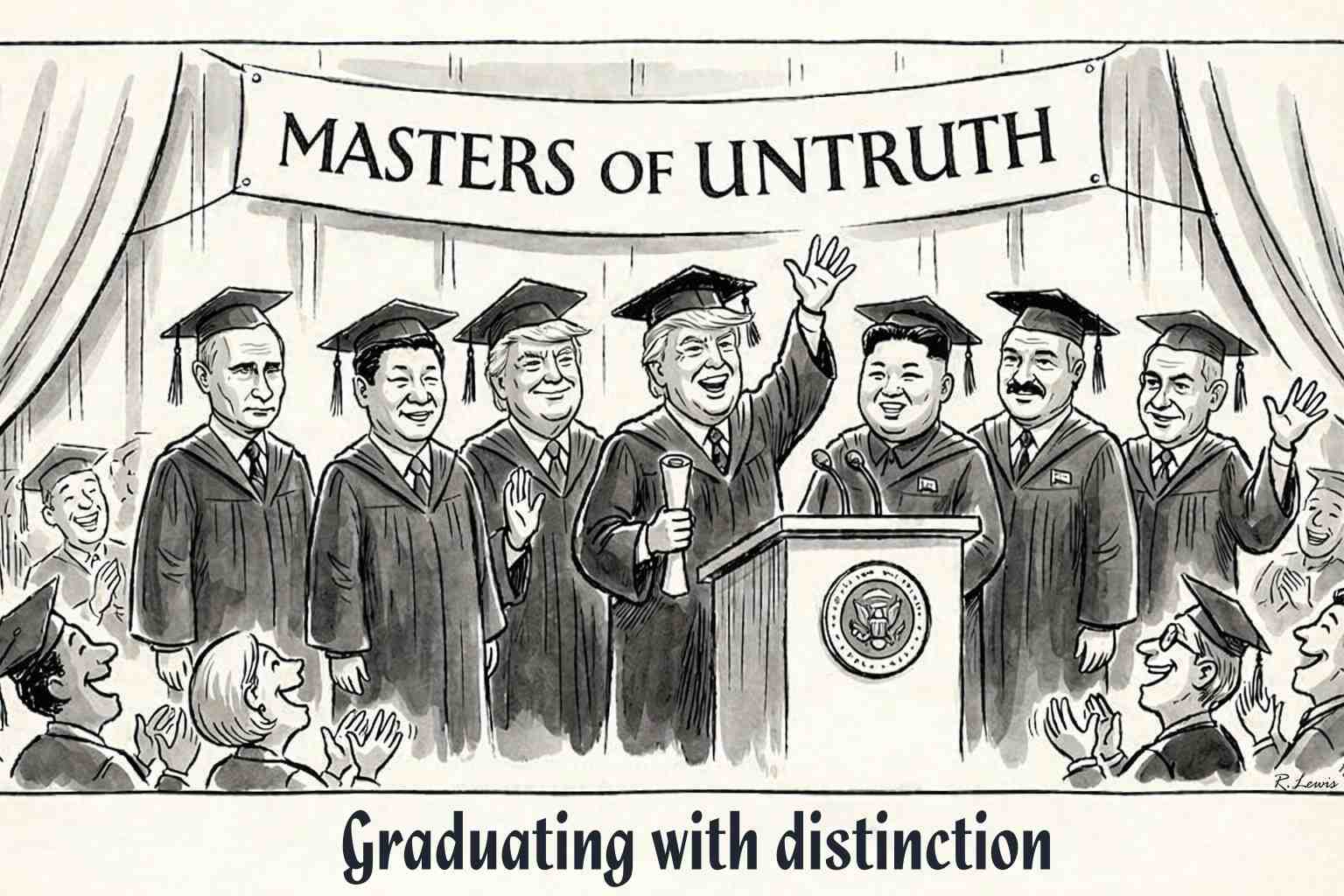 approaches
have achieved new life for mendacity and deception.
Perception and understanding are challenged everywhere
by those needing to deceive in politics, business
and in education.
approaches
have achieved new life for mendacity and deception.
Perception and understanding are challenged everywhere
by those needing to deceive in politics, business
and in education.
Is
there an observable societal solution for this cascade
of untruth?
Although
this phenomenon has existed for ages, the most successful
attempt to undue the misery of lies and exaggeration
was initiated by Ancient Greeks in the fifth century
B.C. After decades of experimenting with different
forms of government, Athenians decided to introduce
free democracy and, from about 505 B.C., citizens
gathered on the Pynx hill where assemblies were organized,
discussions and debates held, and a degree of political
freedom that the world had never experienced became
a reality.
Not
long after the miracle of Greek democracy had dawned
it became apparent that most power lay in the hands
of those who could speak and persuade with greater
persuasive skill. Soon the art of rhetoric assumed
center stage and teachers of rhetoric or Sophists
flooded the city receiving huge compensation for their
expertise. They began to identify any speech that
contained exaggerations, lies, or subtle logical errors
and to instruct all who wished or wanted to improve
their persuasive speech.
These
remarkable Greek and later Roman scholars developed,
categorized, and named hundreds of rhetorical terms,
devices, and strategies that still form the basis
of modern persuasive speech and literary analysis.
A few of these Greek terms are still referenced. Pathos
was an appeal to the audience’s emotions such as fear,
joy, or pity. Ethos appealed to credibility, character,
or ethics. Anaphora utilized initial repetition
(I have a dream, MLK). Roman terms include argumentum
ad verecundiam (illogical transfers) and argumentum
ad populum (argument to the people).
A
working list of rhetorical terms and an insight into
the studious way the Greeks dealt with the problem
is available at the following URL.
This
list is by no means complete but the scholarship that
went into researching these terms gives us an insight
into the vast intellectual efforts made by the Greeks
and later the Romans. But these efforts have not been
amply studied. I have shown the list to scores of
university classics professors and most confess to
never even having heard of most of the terms.
If that situation seems shocking, consider the following:
Of the thousands of universities in the United States,
there are only about 200 that offer a classics major.
And of those there is not one that offers a major
study in rhetoric. The intellectual menace of a citizenry
constantly confronted with untruth was stated ironically
by one of the most famous rhetoricians in Greece -
Gorgias ( 483- 375 B.C.). Although he was one of the
most sought after and highly paid of Sophists, he
warned that a political system dominated by such thinking
was doomed. In his encomium on Helen he wrote, “The
power of speech has the same effect on the disposition
of the soul as the disposition of drugs on the nature
of bodies.”
If
that development was true in the society that invented
rhetorical government and led the world in philosophical
political idealism, then one wonders what lies ahead
in the present day when untruth almost seems fashionable
in the media, and is the daily weapon of choice exercised
by most of the world’s political leaders.