AI
AND ALZHEIMER'S
AI
is an incredibly powerful accelerator, but so far it cannot
yet solve Alzheimer's because the disease is not just a
data problem—it is a biological mystery.
In
2026, we are seeing AI perform miracles in early detection
and drug design, but several hard walls remain that silicon
and code cannot leap over on their own.
AI is world-class at finding patterns in data, but it can
only analyze the data we give it. For decades, the leading
theory was that Amyloid plaques caused Alzheimer’s.
AI models trained on that assumption found ways to clear
plaques—and they succeeded.
The
Reality: Drugs like Lecanemab and Donanemab (FDA-approved
and in use in 2026) successfully clear the 'trash' from
the brain, but they don't fully stop the cognitive decline.
The
AI Gap: AI cannot hallucinate a new biological mechanism
that humans haven't discovered yet. If the true cause is
something else—like lithium depletion (a major research
breakthrough in early 2026) or metabolic dysfunction—AI
can only help us once we start feeding it data on those
specific variables.
Even if AI designs the perfect molecule to cure the disease,
that molecule has to actually get into the brain. The brain
is protected by a nearly impenetrable filter called the
Blood-Brain Barrier.
The
Engineering Challenge: Designing a drug that is small enough
to cross this barrier but stable enough not to be destroyed
by the liver is a physical engineering feat. AI is helping
(using technologies like Roche's Brainshuttle), but we are
still limited by the slow pace of physical chemistry and
fluid dynamics.
AI
has reached a point where it can identify 20 potential drug
candidates in the time it used to take to find one. However:
Clinical Trials take years: You cannot speed up the time
it takes for a human brain to age or a drug to show long-term
side effects.
AI
models are often 'unimodal' (focusing only on genetics or
only on imaging). Alzheimer's is multimodal—it involves
genetics, lifestyle, environment, and aging. In 2026, "Agentic
AI" (AI that can reason across different types of data)
is just beginning to bridge this gap.
To "solve" Alzheimer's, AI needs high-quality
data from people before they show symptoms.
The
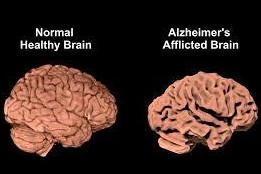
Catch-22: By the time someone is diagnosed, the brain damage
is already extensive. We lack massive, decades-long datasets
of healthy brains transitioning into Alzheimer's brains.
Without that before and after data, AI is essentially trying
to solve a puzzle with half the pieces missing.
While it hasn't found a silver bulle" cure, AI has
fundamentally shifted the strategy.
Speeding
Up Discovery: AI-discovered molecules now have an 80–90%
success rate in Phase I trials, compared to the historical
40–60%.
Zero-Cost
Detection: New AI tools can now flag early signs of dementia
by analyzing speech patterns or electronic health records
in under a minute, often years before a clinical diagnosis.
Digital
Twins: Researchers are using AI to create digital twins
of patients to simulate how a drug might work before ever
giving it to a human.
In
short: AI has found the lead and the map, but biology is
still the one holding the lock. We are no longer looking
for a single cure, but a 'cocktail' of treatments—and
AI is currently the lead bartender.