|
|
state
terrorism and
THE WAR AT HOME
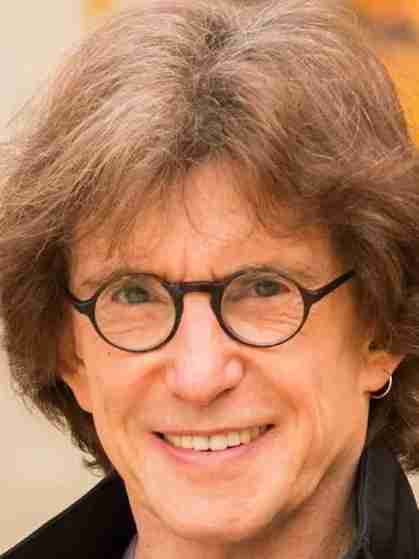
by
HENRY A. GIROUX
__________________________________________
Henry
A. Giroux
currently holds the Global TV Network Chair Professorship
at McMaster University in the English and Cultural Studies
Department and a Distinguished Visiting Professorship
at Ryerson University. He is the author of more than
50 books including The Educational Deficit and the
War on Youth and Zombie
Politics and Culture in the Age of Casino Capitalism.
Many of his essays, including The Spectacle of Illiteracy,
appear on his website at www.henryagiroux.com.
His interview with Bill
Moyers is must viewing. He was recently named
one of the century's 50 most significant contributors
to the debate on education.
You
should not honour men more than truth.
Plato
Across the
globe, we are living in a moment of profound crisis
where the very essence of education as a democratic
institution is under attack. In the United States, the
assault on higher education is part of a broader war
waged by authoritarian forces aiming to dismantle the
pillars of not only academic freedom, dissent, and human
rights, but also the essential foundations of democracy
itself. Universities are no longer seen as spaces of
intellectual freedom and critical inquiry but as battlegrounds
for ideological control. Campus protests are met with
police brutality; students are abducted for their political
views, and those who dare to speak out against the prevailing
orthodoxy face expulsion, censorship, and criminalization.
Trump’s administration has fueled this campaign,
not only targeting academic freedom but also pushing
policies that criminalize dissent, especially when it
comes to movements like those advocating for Palestinian
liberation. The erosion of civil liberties extends to
international students protesting in solidarity with
Gaza, with threats of deportation looming over them.
The chilling message is clear: higher education is no
longer a sanctuary for free thought; it is a field of
repression where the rule of authoritarianism dominates.
State terrorism at home targets those who dare to engage
in the dangerous practice of critical thinking and the
courageous act of holding power accountable. It is a
violent apparatus that imposes terror on all who are
deemed “other”—immigrants, Black people,
trans people, brown people, campus protesters, and anyone
who refuses to conform to the narrow, racist vision
articulated by Stephen Miller, the White House deputy
chief of staff. He is notorious for his white nationalist
views, has become a central figure in shaping the Trump
administration’s policies. At a Trump rally in
Madison Square Garden, he boldly declared that “America
is for Americans and Americans only,” a mantra
that echoed the Nazi slogan, “Germany for Germans
only.” As Robert Tait reports in The Guardian,
Tara Setmayer, a former Republican communications director
on Capitol Hill, warns that his rise is a direct threat,
as he now wields the power of the federal government
to impose his fascist worldview.
Setmayer,
who now leads the women-led political action committee
Seneca Project, explains that his vision has been fully
embraced as a core political strategy under Trump. “That
view has now been transformed into the main political
policy and aim of Donald Trump’s presidency,”
she states. The demagoguery surrounding immigration
has always been at the heart of Trump’s political
ascent. With Miller’s goal to make America whiter
and less diverse now backed by the unchecked power of
the presidency, Setmayer warns that this combination
is not just dangerous, it poses a grave threat to American
values and the rule of law itself.
Under the
Trump rule, state terrorism is not confined to domestic
borders; it extends its reach through reckless, international
aggression. Trump’s administration is waging war
not just within the U.S., but abroad, with flagrant
violations of international law. His unprovoked aggression
against Iran, coupled with his unwavering support for
Israel’s genocidal campaign in Gaza and its unthinkable
war on children, exemplifies the regime’s disregard
for global norms and human rights. Beyond the Middle
East, Trump’s regime seeks to impose its will
through threats, tariffs, and naked displays of power.
His brutal crackdown on immigration, the transformation
of I.C.E. into a Gestapo-like force, and the relentless
narrowing of who is permitted entry into the U.S. expose
his deeper authoritarian impulses. In this vision, the
international community becomes little more than a pawn
in his relentless pursuit of geopolitical dominance.
Trump’s
disdain for allies and international cooperation reached
alarming heights, exemplified by his call to attack
Panama, annex Canada, and seize Greenland. These wild,
imperialistic notions reflect a deeply rooted belief
that America’s might should dominate the global
stage, with little regard for diplomacy or the sovereignty
of other nations. In Trump’s worldview, global
relations are defined by the logic of conquest and dominance,
where the violence of state terror is justified by the
expansion of America’s influence and control.
This is a regime that knows no limits, expanding its
machinery of fear and violence, both at home and across
the globe, in a sustained assault on humanity, justice,
and the most basic principles of international law.
THE SCOURGE
OF NEOLIBERAISM
The ongoing
assaults on democracy, both domestically and globally,
are not isolated events but part of the groundwork laid
by gangster capitalism for the rise of fascism in American
society. Central to this process is the transformation
of the university from a public good to a privatized
institution, where students are seen as human capital,
courses are dictated by consumer demand, and more recently
the curricula is whitewashed and filled with far-right
propaganda, often under the cover of implementing patriotic
education, cleansed of antisemitism. Under the market-driven
logic of neoliberalism, universities have become spaces
that prioritize economic outputs over intellectual autonomy,
turning critical thought and democratic engagement into
commodities. This shift has undermined the university’s
role as a crucible for challenging the status quo, replacing
it with a system of training rather than fostering a
culture of critical learning, dialogue, and informed
judgment.
As neoliberal
policies encourage privatization, restrict access, and
force institutions into service to corporate interests,
the university is no longer seen as a public trust.
It has become a tool for ideological indoctrination,
training citizens to uphold the status quo rather than
challenge it. This transformation, in part, is a direct
response to the democratization of the university that
reached its peak in the 1960s, with intellectuals, campus
protesters, and marginalized communities seeking to
broaden the educational mission. The assault on higher
education as a site of critique and democratization
has intensified over the last four decades with the
rise of the far-right, with broader implications that
include intellectuals, minority students, and critical
formative cultures essential to the foundation of a
substantive democracy.
As the
South African Nobel Prize winner in literature, JM Coetzee,
points out in a different context, the reactionary hedge-fund
billionaires “reconceive of themselves as managers
of national economies” who want to turn universities
into training schools equipping young people with the
skills required by a modern economy.” Coetzee’s
words are even more relevant today, given that this
attack on higher education, which is both ideological
and increasingly dependent on the militaristic arm of
the state, reflects a broader attempt to eliminate the
university’s critical function. Rather than serving
the public good, the university is increasingly framed
as a private investment, or an arm of state repression,
where its governance mirrors the merging of the exploitative
practices of corporate models, such as Walmart’s
labor relations and the governing principles of fascism.
In the spirit of this concern, Coetzee advocates for
the defense of education as an institution dedicated
to cultivating intellectual insight, civic responsibility,
social justice, and critical thinking.
The questions
we must ask at this crucial moment in American history
are not about how the university can serve market interests
or the authoritarian ideologies of the Trump regime,
but how it can reclaim its role as a democratic public
sphere. How might we redefine the university to safeguard
the interests of young people amidst rising violence,
war, anti-intellectualism, authoritarianism, and environmental
collapse? As Zygmunt Bauman and Leonidas Donskisastutely
point out, “How will we form the next generation
of intellectuals and politicians if young people will
never have an opportunity to experience what a non-vulgar,
non-pragmatic, non-instrumentalized university is like?”
In this spirit, we must recognize how larger economic,
social, and cultural forces threaten the very idea of
education, especially higher education, at a time when
defending it as a space for critique, democracy, and
justice has never been more urgent. Moreover any defense
of the university as a public good demands an alliance
of diverse groups willing to recognize that the fight
for higher education cannot be separated from the wider
struggle for a socialist democracy. The threats being
waged against higher education are also a threat to
the nation, a culture of informed citizens, and how
we think about agency and its fundamental obligations
to democracy itself.
At the
same time, as neoliberalism faces a profound legitimacy
crisis, failing to deliver on its promises of prosperity
and social mobility, it increasingly resorts to fascist
rhetoric. This rhetoric scapegoats Black communities,
immigrants, and dissenting students, blaming them for
the deepening crises plaguing America. In doing so,
neoliberalism shifts blame while reinforcing a narrative
that justifies authoritarian measures, further marginalizing
those already oppressed. As this rhetoric spreads, the
very institutions meant to foster critical engagement—like
the university—are further corrupted, their original
role of challenging the status quo replaced with one
of reinforcing the existing power structures.
EDWARD SAID’S
PEDAGOGY OF WAKEFULNESS – DREAMING THE IMPOSSIBLE
It is within
this oppressive context that Edward Said’s work
gains renewed relevance, offering the crucial pedagogical
framework for resisting authoritarianism and reclaiming
higher education as a site of resistance. In opposition
to the debased view of educational engagement promoted
by the neoliberal agenda and far-right politicians,
Said championed what I label as the “pedagogy
of wakefulness.” This pedagogy emphasizes the
need for intellectuals to remain vigilant, awake to
the realities of power, work with an array of social
movement, and actively engaged in resisting systems
of oppression. Said’s pedagogy demands that education
be used as a vehicle for social change, not simply as
a means of economic productivity or ideological conformity.
Moreover, he argued that cultural workers and all manners
of engaged intellectuals work in a variety of sites
and on different platforms in order to address the public
in a language that was rigorous, accessible, and comprehensive
in its ability to connect a variety of issues.
In defining
Said’s pedagogy of wakefulness, I am reminded
of a deeply personal passage from his memoir, Out of
Place, where he reflects on the final months of his
mother’s life in a New York hospital. Struggling
with the ravaging effects of cancer, his mother asked
him, “Help me to sleep, Edward.” This poignant
moment becomes a gateway for Said’s meditation
on sleep and consciousness, which he links to his broader
philosophy of intellectual engagement. Said’s
meditation moves between the existential and the insurgent,
between private pain and worldly commitment, between
the seductions of a “solid self” and the
reality of a contradictory, questioning, restless, and
at times, uneasy sense of identity. The beauty and poignancy
of his moving commentary is worth quoting at length:
‘Help
me to sleep, Edward,’ she once said to me with
a piteous trembling in her voice that I can still hear
as I write. But then the disease spread into her brain—and
for the last six weeks she slept all the time—my
own inability to sleep may be her last legacy to me,
a counter to her struggle for sleep. For me sleep is
something to be gotten over as quickly as possible.
I can only go to bed very late, but I am literally up
at dawn. Like her I don’t possess the secret of
long sleep, though unlike her I have reached the point
where I do not want it. For me, sleep is death, as is
any diminishment in awareness. ..Sleeplessness for me
is a cherished state to be desired at almost any cost;
there is nothing for me as invigorating as immediately
shedding the shadowy half-consciousness of a night’s
loss than the early morning, reacquainting myself with
or resuming what I might have lost completely a few
hours earlier….A form of freedom, I like to think,
even if I am far from being totally convinced that it
is. That skepticism too is one of the themes I particularly
want to hold on to. With so many dissonances in my life
I have learned actually to prefer being not quite right
and out of place.
Said’s
reflection here is more than a personal meditation;
This passage becomes a powerful metaphor for Said’s
pedagogy of wakefulness. It is a call to remain in constant
motion—intellectually, politically, and socially.
The metaphor of sleeplessness, for Said, embodies a
refusal to succumb to the seductions of conformity or
passive consumption. This state of “wakefulness”
requires intellectual vigilance, a refusal to settle
for easy answers or unchallenged ideologies. It speaks
to the necessity of embracing discomfort, of being “not
quite right and out of place,” as Said himself
puts it. In this intellectual space of uncertainty,
a new, critical sense of identity can emerge—one
that is always questioning, always in motion.
For Said,
intellectuals–those who are alive to thinking
critically and acting bravely–must engage critically
with the world, confronting its injustices and inequalities,
and using their positions to challenge power. His pedagogy
insists that education is not merely about transmitting
knowledge but about awakening students to the complexities
of the world. It demands that we lift complex ideas
into public discourse, recognizing human suffering and
injustice both inside and outside the academy, and using
theory as a tool for critique and change.
This pedagogy
is particularly urgent in the context of the current
Trump regime, where the state has weaponized ignorance
and repression, seeking to silence dissent and erase
marginalized histories. Said’s pedagogy of wakefulness
provides a framework for resisting this intellectual
and cultural erasure; what Marina Warner in a different
context called “the new brutalism in academia.”
By embracing Said’s vision, educators can transform
their classrooms into spaces of radical engagement—spaces
where students are encouraged not only to critique but
to act, to connect their private struggles to the larger
social issues that shape their world. This is particularly
relevant in the fight for Palestinian liberation, where
Said’s work has long offered a framework for resisting
colonial violence and challenging the narratives that
justify oppression.
In a time
of rising civic cowardice in the mainstream media, elite
education institutions, and cravenly law firms, hiding
behind appeals to balance and objectivity makes it difficult
for educators, journalists, public servants, and media
pundits to recognize that being committed to something
does not cancel out what C. Wright Mills once called
hard thinking. More specifically, Mills argued “that
social analysis could be probing, tough-minded, critical,
relevant and scholarly, that ideas need not be handled
as undertakers handle bodies, with care but without
passion, that commitment need not be dogmatic, and that
radicalism need not be a substitute for hard thinking.”
Building on Said’s pedagogy of wakefulness “hard
thinking” points to a pedagogy that needs to be
rigorous, self-reflective, and committed not to the
dead zone of instrumental rationality or the abyss of
indoctrination, but what Gayatri Spivak calls “the
practice of freedom,” to a critical sensibility
capable of advancing the parameters of knowledge, addressing
crucial social issues, and connecting private troubles
and public issues.
THE ROLE
OF CULTURE IN PEDAGOGY: A CALL FOR RESISTANCE
In my own
work, I have long argued that culture plays a crucial
role in shaping the civic consciousness necessary for
resistance. Culture is not merely a passive reflection
of society; it is a dynamic force that shapes our understanding
of the world and our place within it. In an era where
neoliberalism and fascism are increasingly intertwined,
culture becomes a vital space for alternative narratives
to take root. It is crucial to acknowledge that culture
has become a tool for authoritarian regimes to control
public consciousness, suppress dissent, and maintain
the status quo. However, it remains one of the few spaces
where resistance can also flourish.
Said’s
pedagogy of wakefulness offers a critical lens through
which to view the role of culture in education. It calls
on educators to resist the commodification and militarization
of culture and instead cultivate a pedagogy that is
engaged, critical, and rooted in the politics of resistance.
This is not simply an intellectual exercise in critical
thinking or a new found attentiveness about the rise
of fascist politics, but a call to arms—an invitation
to create a culture of resistance within the university
and other cultural apparatuses, that equips students
and the broader public with the tools to challenge the
growing tide of authoritarianism.
This cultural
resistance must be grounded in the belief that education
is a public good, a space where the radical potential
for social change can be realized, anti-capitalist values
can be challenged, and the groundwork can be laid for
mass resistance to an America marked by what the late
Mike Davis, cited in Capitalist Realism, called “an
era in which there is a super saturation of corruption,
cruelty, and violence . . . ffails any longer to outrage
or even interest.” Universities must reject the
neoliberal redefinition of education as a commodity
and instead embrace the idea that education is a moral
and political practice, one that is central to the health
of democracy. As Said argued, intellectuals and educators
have a responsibility to bear witness to human suffering,
to challenge power, and to use their positions to promote
justice. In doing so, they can help reclaim education
as a space for imagination, resistance, and liberation.
CONCLUSION
The current
assault on higher education is not just an attack on
academic institutions but on the very idea of humanity,
thinking, and democracy itself. As universities become
increasingly corporatized and ideologically colonized,
we must resist the neoliberal and fascist forces that
seek to transform education into a tool of indoctrination.
Edward Said’s pedagogy of wakefulness provides
a vital framework for this resistance, offering a vision
of education that is both critical and politically engaged.
By embracing this pedagogy, educators can help transform
the university from a site of ideological compliance
into a space where students are empowered to resist,
imagine, and fight for a more just and democratic world.
The struggle to reclaim education as a democratic force
will determine not only the future of the university
but the future of democracy itself.
also by Henry Giroux
The
Death of Memory
Education
in Dark Times
Childcide in Fascist Theocracies
The Corporate Firewall Against Truth
Assassins of Memory
Not Joe's But Our Collective Memory Issues
The
Politics of Emergency Time
Hijacking
Freedoms
America
at the Crossroads
Gangster
Capitalism
Historical
Amnesia in Age of Capitalist Apocalypse
The
Inequality of Freedom
The
Nazification of Education
Killing
Fields in Age of Mass Shootings
The
Pedagogy of Resistance
The
Death of Ethics
Banning
Books
Homage
to Paulo Freire
Plague
of Manufactured Ignorance
Racial
Cleansing and Erasing History
Plague
of Historical Amnesia
Recovering
from Trumpism
Tribute
to Noam Chomsky
The
Ouster of Trump
White
Supremacy in the Offal Office
The
Plague of Inequity
Covid
and our Embattled Society
Trump
and the Corona Death Waltz
Neoliberal
Fascism
The
Terror Unforseen
Interview
of H.A.Giroux
The
Normalization of Fascism
The
Public Intellectual II
Bertrand
Russell: Public Intellectual
Thinking
Dangerously in Dark Times
Democracy
in Exile
Authoritarianism
in America
Violence:
US Favourite Pastime
Losing
in Trump's America
In
Dark Times Teachers Matter
The
Age of Civic Illiteracy
Exile
and Disruption in the Academy
What
Society Produces a Donald Trump
From
School to the Prison Pipeline
Orwell
& Huxely
American
Sniper and Hollywood Heroism
Selfie Culture
The
Age of Disposability
In
the Shadow of the Atomic Bomb
Killing
Machines and the Madness of the Military
The
Age of Neoliberal Cruelty
The
Politics of the Deep State
Challenging
Casino Capitalism
Crisis
in Democracy
America's
Descent into Madness
|
|
|