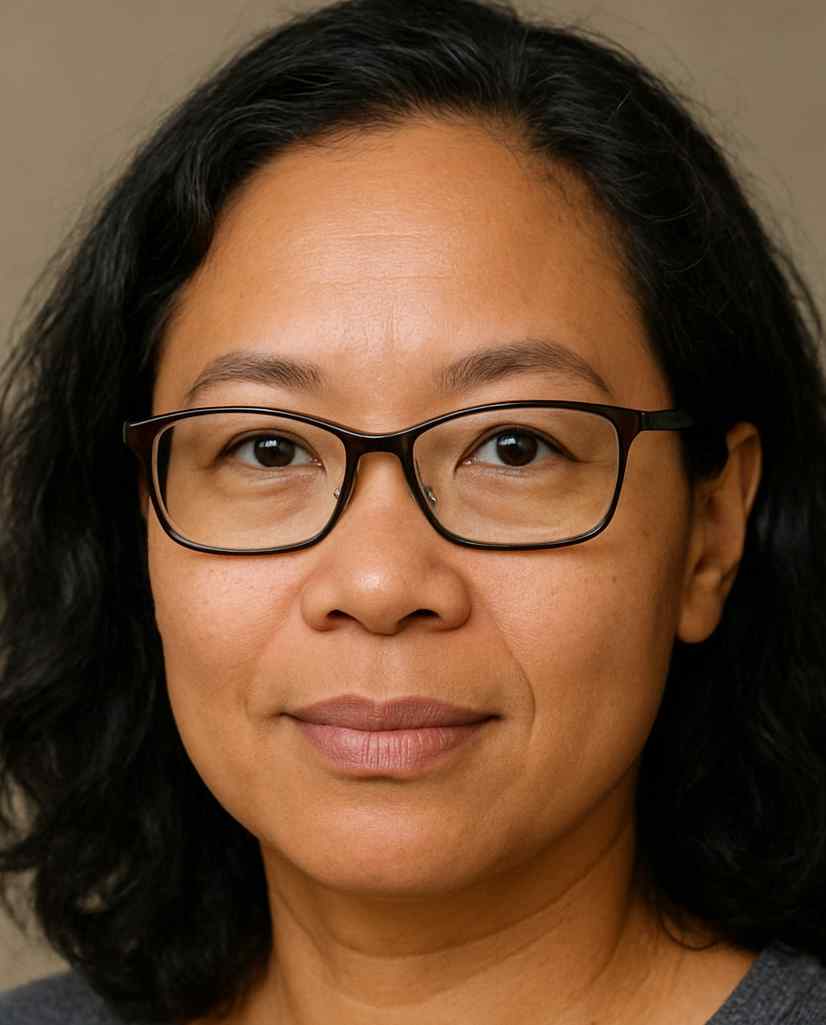
Laetitia
Chen is a graphic designer and writer living in Montreal.
This is her first piece for Arts & Opinion.
THE
3 A.M. CONFESSION
It's
3:17 AM, and I'm staring at the ceiling of my Victorian
duplex in Le Plateau-Mont-Royal, listening to Montreal's
nocturnal symphony. The sirens echoing off the ornate
wrought-iron balconies, the late-night delivery trucks
navigating the crooked streets, the couple in the triplex
next door having what sounds like their weekly existential
crisis in rapid-fire French—all of it mingles with
the blue glow seeping through my blackout curtains from
the 24-hour dépanneur across rue Saint-Laurent.
But the real noise, the one that's been keeping me awake
for months, isn't coming from outside these century-old
walls. It's coming from inside my own head.
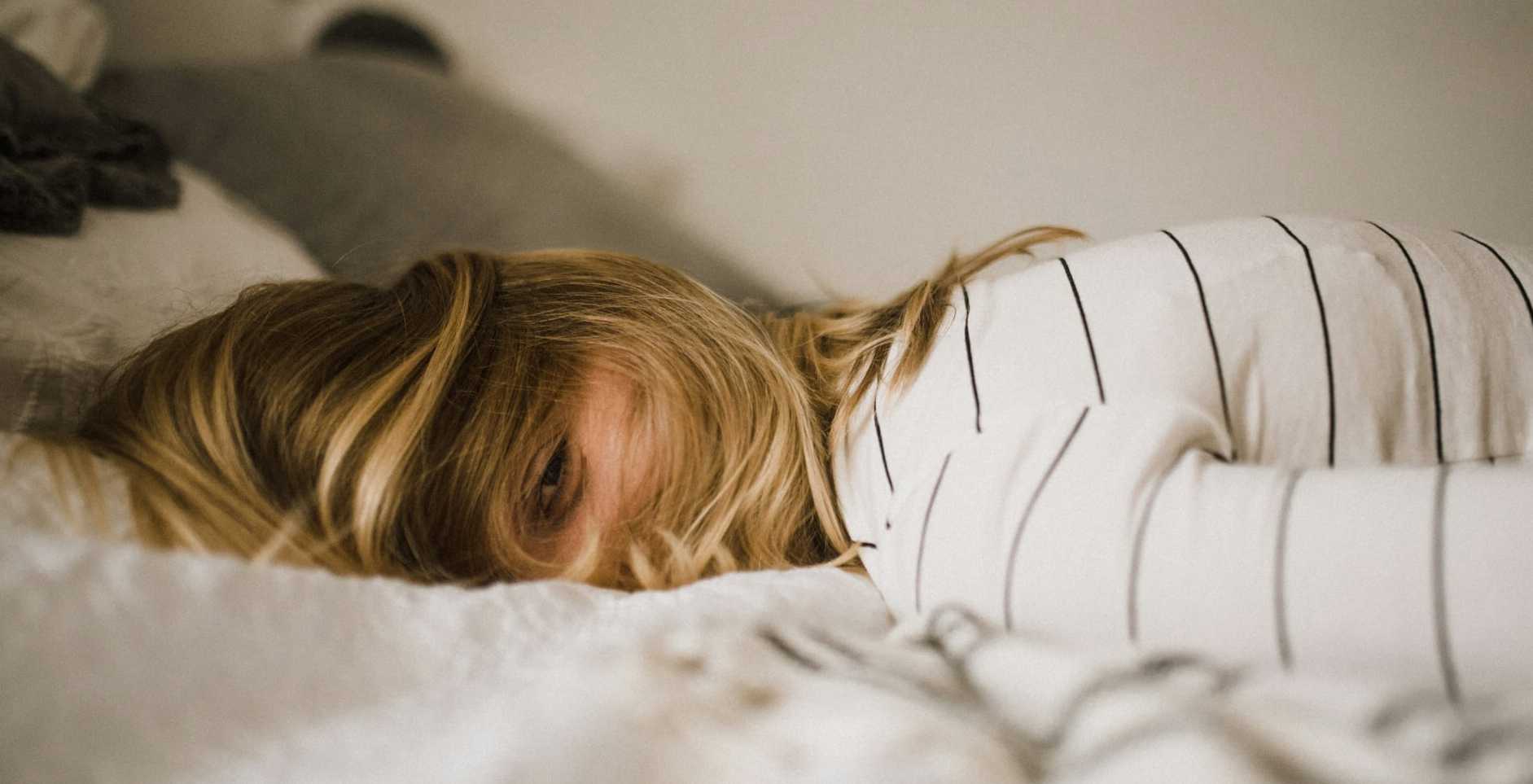 My
phone sits on the nightstand, face down but not silent.
Even in its supposed dormancy, I can feel its presence
like a low-grade fever. The phantom vibrations. The mental
inventory of unread emails, unanswered texts, Instagram
stories I haven't watched. The knowledge that somewhere
in the world, someone is working, creating, achieving
while I lie here in the dark, failing at the most basic
human function: sleep.
My
phone sits on the nightstand, face down but not silent.
Even in its supposed dormancy, I can feel its presence
like a low-grade fever. The phantom vibrations. The mental
inventory of unread emails, unanswered texts, Instagram
stories I haven't watched. The knowledge that somewhere
in the world, someone is working, creating, achieving
while I lie here in the dark, failing at the most basic
human function: sleep.
This
is the confession of a reformed insomniac, but more than
that, it's the story of how I learned that my sleeplessness
wasn't a personal failing—it was a political condition.
My insomnia wasn't just about stress or caffeine or bad
sleep hygiene. It was about living as a young woman in
a culture that has weaponized our anxiety, monetized our
attention, and convinced us that rest is a luxury we can't
afford.
The
journey to reclaiming my sleep became an unexpected education
in resistance, a crash course in how personal struggles
are often political problems in disguise. This is the
story of how I learned to sleep again, not by optimizing
myself into submission, but by recognizing that my insomnia
was a symptom of a sick system—and that healing
required both personal action and political awakening.
THE MAKING OF AN INSOMNIAC
I
wasn't born sleepless. Like most children, I once fell
asleep easily, my small body surrendering to exhaustion
with the trust that tomorrow would take care of itself.
But somewhere between adolescence and adulthood, between
high school and college, between college and the "real
world," sleep became elusive, then adversarial, then
impossible.
The
timeline of my insomnia maps perfectly onto the timeline
of my digital life. My first smartphone arrived during
my sophomore year of college—a sleek device that
promised to make my life easier, more connected, more
efficient. Instead, it became the architect of my sleeplessness,
training me to expect instant gratification, constant
stimulation, and perpetual availability.
The
symptoms started small. Checking my phone "one last
time" before bed, which turned into an hour of mindless
scrolling. Setting my alarm earlier and earlier to accommodate
morning email checks, Instagram updates, news consumption.
The gradual erosion of the boundary between day and night,
work and rest, public and private space.
By
my mid-twenties, working as a freelance graphic designer
in Montreal, my relationship with sleep had become openly
hostile. I would lie in bed for hours, my mind racing
through tomorrow's deadlines, yesterday's mistakes, the
endless scroll of social comparison that social media
had made into a 24-hour sport. The slanted floors of my
Plateau duplex seemed to mirror my tilted relationship
with rest—everything slightly off-kilter, nothing
quite level. Sleep felt like failure—time wasted,
opportunities missed, productivity lost.
The
cultural messaging around my sleeplessness was clear:
this was my fault. I wasn't trying hard enough. I needed
better sleep hygiene, more discipline, stronger willpower.
The self-help industrial complex offered endless solutions:
meditation apps, sleep trackers, weighted blankets, blue
light glasses, magnesium supplements, CBD oils. Each promised
to fix what was broken in me, to optimize my way back
to rest.
But
the more I tried to solve my insomnia as an individual
problem, the worse it became. The pressure to sleep well
became another source of anxiety. The tracking devices
that promised insight delivered only more data to obsess
over. The meditation apps that promised peace became another
item on my productivity to-do list.
I
was trapped in what I now recognize as the neoliberal
approach to sleep: the idea that rest is a personal responsibility,
that insomnia is an individual failing, and that the solution
lies in better self-management rather than systemic change.
This approach ignores the obvious truth that my generation's
sleep problems aren't coincidental—they're the predictable
result of living in a culture designed to keep us awake,
anxious, and available.
THE GENDERED DIMENSIONS OF SLEEPLESSNESS
As
a woman navigating insomnia, I quickly learned that my
experience was both universal and particular. The statistics
on women and sleep tell a story of systematic disadvantage:
women are 40% more likely to experience insomnia than
men, more likely to suffer from anxiety-related sleep
disorders, and more likely to have their sleep disrupted
by caregiving responsibilities.
But
the numbers only hint at the deeper gendered dynamics
of sleeplessness in contemporary culture. Women's sleep
is interrupted not just by biology but by the emotional
labor we're expected to perform, the mental load we're
trained to carry, the hyper-vigilance that comes with
navigating a world that often feels unsafe.
My
own insomnia was deeply entangled with the particular
pressures of being a young woman in the digital age. The
constant self-surveillance of social media, where every
moment of my life was potential content, every experience
a possible post. The comparison culture that turned other
women into competitors rather than allies. The pressure
to be simultaneously successful and effortless, ambitious
and agreeable, independent and available.
The
beauty industry's colonization of sleep added another
layer of complexity. Sleep became "beauty sleep,"
rest became "self-care," and even my most private
moments were reframed as opportunities for optimization.
The skincare routines, the silk pillowcases, the expensive
pajamas—all of it turned sleep into another arena
for consumption and self-improvement.
Late
at night, scrolling through Instagram, I would see other
women performing their bedtime routines with the same
careful curation they brought to their morning coffee
or workout selfies. Sleep had become another lifestyle
choice, another way to signal class status and self-discipline.
The message was clear: good sleepers were better women,
more successful women, more worthy women.
This
gendered dimension of sleep culture created a double bind.
If I slept well, I was disciplined and healthy. If I didn't,
I was anxious and failing. Either way, my worth was tied
to my ability to perform rest correctly, to optimize even
my unconscious hours in service of productivity and appearance.
The
feminist implications of this dynamic became clear to
me only gradually. The same culture that told me to lean
in, to hustle harder, to optimize every aspect of my life,
was also demanding that I sleep perfectly. I was supposed
to be always available but also well-rested, constantly
productive but also naturally beautiful, endlessly ambitious
but also effortlessly calm.
THE TECHNOLOGY TRAP
The
irony of my eventual solution—finding peace through
a sleep app—wasn't lost on me. After years of blaming
technology for my insomnia, I was turning to technology
for salvation. But this irony points to something important
about our relationship with digital tools: they're not
inherently good or evil, but they can be designed to serve
different masters.
Most
of the technology in my life had been designed to capture
and monetize my attention. Social media platforms engineered
to be addictive. News apps designed to keep me anxious
and engaged. Email systems that turned every moment into
a potential work moment. Even my sleep tracking devices
seemed more interested in generating data than promoting
actual rest.
But
when I discovered BetterSleep, I encountered something
different: technology designed to help me disconnect from
technology. Instead of demanding my attention, it offered
to protect it. Instead of generating anxiety, it promised
to soothe it. Instead of keeping me awake, it was explicitly
designed to help me sleep.
The
app's approach felt revolutionary in its simplicity. Rather
than tracking my sleep to generate more data to worry
about, it offered sounds designed to mask the noise of
the city and my own anxious thoughts. Rather than gamifying
rest with points and achievements, it simply provided
tools for relaxation. Rather than connecting me to more
networks and notifications, it helped me disconnect from
the digital world entirely.
The
first night I used the app, I chose a combination of rain
sounds and distant thunder—a digital recreation
of the storms I remembered from childhood, when sleep
came easily and the world felt safe. As I lay in bed listening
to the artificial rain, wrapped in my grandmother's Hudson's
Bay point blanket that had somehow made its way from her
Westmount home to my crooked-floored Plateau apartment,
I felt something I hadn't experienced in years: the gradual
loosening of my grip on consciousness, the gentle slide
from waking into dreaming.
It
wasn't magic, and it wasn't immediate. But over the weeks
that followed, the app became part of a larger practice
of digital resistance. I began to see my phone not as
a master demanding constant attention, but as a tool I
could use intentionally. I learned to curate my digital
environment as carefully as my physical one, choosing
apps and content that served my wellbeing rather than
undermining it.
THE POLITICS OF SOUND
The sounds that helped me sleep—rain, ocean waves,
forest ambience—weren't just pleasant audio. They
were political choices, acts of resistance against the
sonic landscape of late capitalism. In a world of sirens
echoing off Plateau balconies, construction noise from
endless condo developments, the rumble of the 80 bus on
Saint-Laurent, and the constant hum of air conditioning
and electronics, choosing to listen to natural sounds
was a form of environmental activism.
The
soundscape of insomnia is the soundscape of inequality.
Those who can afford quiet neighborhoods like Outremont,
sound-proofed condos, and distance from the Métropolitaine
and Ville-Marie expressways sleep better than those who
cannot. The wealthy buy silence while the poor inherit
noise. My ability to mask the sounds of the Plateau with
digital nature sounds was a privilege, but it was also
a form of resistance against the acoustic pollution that
keeps so many of us awake.
The
app's library of sounds became a catalog of lost worlds:
forests without chainsaws, oceans without shipping lanes,
rain without the anxiety of climate change. These weren't
just sleep aids; they were reminders of what we've lost
and what we might reclaim. Each night, as I fell asleep
to the sound of digital crickets, I was participating
in a small act of environmental imagination.
But
the politics of sound go deeper than environmental nostalgia.
The choice to listen to calming sounds rather than the
news, to prioritize rest over productivity, to value peace
over stimulation—these are political choices in
a culture that profits from our anxiety and exhaustion.
The
meditation and mindfulness movement has been criticized
for depoliticizing suffering, for turning systemic problems
into individual spiritual challenges. But I found something
different in my nightly sound practice. Rather than accepting
my insomnia as a personal failing to be transcended through
meditation, I began to understand it as a reasonable response
to unreasonable circumstances.
The
sounds that helped me sleep weren't teaching me to accept
the world as it is, but to imagine the world as it could
be. They were creating space for the kind of deep rest
that makes resistance possible, the kind of restoration
that fuels the energy needed for change.
THE
RITUAL OF RESISTANCE
Developing
a healthy relationship with sleep required more than just
finding the right app or the right sounds. It required
creating new rituals, new boundaries, new ways of relating
to time and space and technology. It required, in essence,
learning to resist the culture that had made me sleepless
in the first place.
My
evening routine became a practice of digital resistance.
At 9 PM, I would begin the process of disconnecting: phone
on airplane mode, laptop closed, notifications silenced.
This wasn't just about avoiding blue light or reducing
stimulation—it was about reclaiming my evening hours
from the demands of digital capitalism.
The
hour before bed became sacred time, protected from productivity
and optimization. I would dim the lights, make tea with
herbs from Marché Jean-Talon, read physical books,
write in a paper journal. Sometimes I'd step out onto
my wrought-iron balcony, breathing in the night air that
carried hints of Portuguese chicken from the restaurant
below and the distant scent of fresh bagels from Fairmount.
These analog activities felt revolutionary after years
of digital overwhelm. The simple act of turning pages,
of writing with a pen, of existing without a screen—these
became acts of rebellion against a culture that had colonized
every moment of my attention.
The
BetterSleep app became part of this ritual, but not its
center. I would choose my sounds mindfully, often mixing
different elements to create unique soundscapes for each
night. Rain and piano for anxious evenings. Ocean waves
and wind chimes for restless nights. Forest sounds and
distant thunder for when I needed to feel held by something
larger than myself.
But
the real transformation wasn't in the sounds themselves—it
was in the practice of choosing them, of taking time to
consider what I needed, of prioritizing my own rest over
the endless demands of productivity culture. Each night,
as I selected my sounds and settled into bed, I was practicing
a form of self-care that was also political resistance.
The
ritual taught me that sleep isn't just a biological necessity—it's
a practice of boundary-setting, a way of asserting that
some parts of my life are not available for colonization
by work, by technology, by the demands of others. The
bedroom became a sanctuary, the evening routine a form
of protection, the act of falling asleep a daily practice
of letting go.
THE COMMUNITY OF THE SLEEPLESS
One
unexpected discovery in my journey toward better sleep
was the realization that I wasn't alone. My insomnia,
which had felt so isolating and personal, was actually
part of a much larger epidemic. The more I talked about
my sleep struggles, the more I discovered that almost
everyone I knew was fighting similar battles.
The
statistics are staggering: 70 million Americans suffer
from sleep disorders, with insomnia being the most common.
Among young adults, the numbers are even higher, with
studies showing that up to 60% of college students experience
poor sleep quality. My generation—the first to grow
up with smartphones, to come of age during the 2008 financial
crisis, to enter adulthood during a global pandemic—is
uniquely sleep-deprived.
But
recognizing the collective nature of our sleeplessness
was both comforting and radicalizing. If so many of us
were struggling with sleep, then maybe the problem wasn't
individual weakness but systemic dysfunction. Maybe our
insomnia was a reasonable response to unreasonable circumstances.
I
began to see my sleep struggles in the context of larger
social and economic forces: the gig economy that demands
constant availability, the housing crisis that forces
young people into noisy, stressful living situations,
the climate crisis that fills our dreams with anxiety
about the future. My insomnia wasn't a personal failing—it
was a symptom of living in a society that prioritizes
profit over human wellbeing.
This
realization was liberating but also overwhelming. If my
sleep problems were political, then solving them required
more than individual action. It required collective resistance,
systemic change, a fundamental reimagining of how we organize
work, technology, and social life.
But
it also meant that my personal practices of sleep resistance—my
evening rituals, my use of the BetterSleep app, my commitment
to protecting my rest—were part of a larger movement.
Every time I chose sleep over productivity, rest over
optimization, I was joining a quiet rebellion of people
who refuse to sacrifice their humanity to the demands
of late capitalism.
THE ECONOMICS OF REST
Learning
to sleep well forced me to confront the economic dimensions
of rest in contemporary society. Good sleep, I realized,
is increasingly a luxury good, available to those with
the resources to buy quiet neighborhoods, comfortable
mattresses, flexible schedules, and stress-free lives.
 My
own journey toward better sleep was enabled by privilege:
the ability to work from home, to set my own schedule,
to afford a duplex in the Plateau (even with its crooked
floors and questionable heating) and quality sleep aids.
The BetterSleep app, while affordable, was still a purchase—another
example of how solutions to systemic problems are often
commodified and sold back to us as individual consumer
choices.
My
own journey toward better sleep was enabled by privilege:
the ability to work from home, to set my own schedule,
to afford a duplex in the Plateau (even with its crooked
floors and questionable heating) and quality sleep aids.
The BetterSleep app, while affordable, was still a purchase—another
example of how solutions to systemic problems are often
commodified and sold back to us as individual consumer
choices.
But
I also began to see how the app represented a different
model of technology, one that prioritized user wellbeing
over engagement metrics. Unlike social media platforms
that profit from keeping us awake and anxious, BetterSleep's
business model aligned with my actual needs: the company
succeeded when I slept well, not when I stayed glued to
my screen.
This
distinction became important to me as I thought about
the role of technology in my life. Not all apps are created
equal. Some are designed to extract value from our attention
and anxiety. Others are designed to serve our genuine
needs and support our wellbeing. Learning to distinguish
between these different types of technology became part
of my practice of digital resistance.
The
economic implications of widespread sleep deprivation
are staggering. Sleep-deprived workers are less productive,
more prone to accidents, and more likely to suffer
from chronic health conditions. The costs to healthcare
systems, employers, and society as a whole are enormous.
Yet we continue to organize work and social life in
ways that systematically undermine sleep.
This
contradiction reveals something important about how capitalism
functions: it often creates the problems it then profits
from solving. The same economic system that keeps us awake
with anxiety and overwork then sells us sleep aids, meditation
apps, and wellness products. The same culture that glorifies
the hustle then pathologizes our exhaustion.
But
recognizing this dynamic also points toward solutions.
If sleep deprivation is an economic problem, then addressing
it requires economic solutions: shorter work weeks, living
wages that don't require multiple jobs, affordable housing
in quiet neighborhoods, healthcare systems that prioritize
prevention over treatment.
THE FEMINIST AWAKENING
As
my sleep improved, I began to notice changes that went
far beyond feeling more rested. The mental clarity that
came with adequate sleep allowed me to see my life—and
my place in the world—with new eyes. I began to
recognize patterns of behavior and thought that I had
previously accepted as natural or inevitable.
The
people-pleasing that had kept me checking email at all
hours. The perfectionism that had turned every project
into a source of anxiety. The internalized pressure to
be constantly productive, constantly improving, constantly
available. These weren't personal quirks—they were
the predictable results of growing up female in a culture
that teaches women to prioritize others' needs over their
own.
Good
sleep gave me the energy and clarity to start saying no.
No to late-night work requests. No to social obligations
that drained rather than nourished me. No to the endless
self-improvement projects that had turned my life into
a series of optimization experiments. Each "no"
felt like a small revolution, a reclaiming of my time
and energy for my own purposes.
The
feminist implications of sleep resistance became clearer
as I talked with other women about their experiences.
So many of us had internalized the message that rest was
selfish, that taking care of ourselves was somehow taking
away from others. We had learned to feel guilty about
sleeping in, about taking naps, about prioritizing our
own rest over the endless demands of work and family and
social obligation.
But
what if the opposite were true? What if taking care of
ourselves—including getting adequate sleep—was
actually a radical act of self-respect that enabled us
to show up more fully for the people and causes we cared
about? What if rest wasn't selfish but necessary, not
lazy but revolutionary?
This
reframing changed everything. Instead of feeling guilty
about my evening routine, I began to see it as a practice
of self-respect. Instead of apologizing for needing eight
hours of sleep, I began to defend my rest as fiercely
as I would defend any other basic human right.
THE RIPPLE EFFECTS
The
changes that came with better sleep extended far beyond
my bedroom. As I became more rested, I became more creative,
more focused, more emotionally resilient. My work improved,
my relationships deepened, my capacity for joy expanded.
But perhaps most importantly, I became more capable of
engaging with the world's problems rather than being overwhelmed
by them.
Good
sleep gave me the emotional regulation to read the news
without spiraling into anxiety. It gave me the mental
clarity to distinguish between problems I could solve
and problems I needed to accept. It gave me the energy
to take action rather than just worry, to engage rather
than just consume.
I
began to see connections between my personal sleep practices
and larger social and political issues. The same mindfulness
that helped me choose calming sounds for sleep also helped
me choose media consumption that informed rather than
inflamed. The same boundary-setting that protected my
evening routine also helped me set boundaries in my work
and relationships.
The
app that had initially seemed like a simple sleep aid
became a gateway to a different way of living. The nightly
practice of choosing sounds, of creating a peaceful environment,
of prioritizing rest over productivity—these small
acts accumulated into a larger transformation of how I
related to myself and the world.
I
began to understand that personal healing and political
action aren't separate projects but interconnected practices.
Taking care of myself—including getting adequate
sleep—wasn't a retreat from the world's problems
but a preparation for engaging with them more effectively.
THE SOUND OF CHANGE
Six
months after downloading the BetterSleep app, my relationship
with sleep had fundamentally changed. I no longer lay
awake for hours, my mind racing with anxiety and self-recrimination.
I no longer felt guilty about needing rest or apologetic
about protecting my sleep. I had learned to see sleep
not as time lost but as time invested in my own wellbeing
and capacity for engagement with the world.
The
sounds that had initially seemed like simple sleep aids
had become something more: a nightly practice of choosing
peace over anxiety, rest over productivity, presence over
performance. Each night, as I selected my sounds and settled
into bed, I was participating in a quiet revolution—a
refusal to sacrifice my humanity to the demands of a culture
that profits from my exhaustion.
But
the real transformation wasn't in the technology itself—it
was in learning to use technology intentionally, to choose
tools that served my wellbeing rather than undermining
it. The BetterSleep app worked not because it was magical
but because it was designed with my actual needs in mind,
because it prioritized my rest over my engagement, my
peace over my productivity.
This
distinction became a model for how I approached other
areas of my life. I began to curate my digital environment
as carefully as my physical one, choosing apps, websites,
and social media accounts that nourished rather than depleted
me. I learned to see technology not as an inevitable force
but as a set of tools that could be used wisely or poorly,
intentionally or mindlessly.
The
journey from insomnia to rest had taught me something
profound about resistance: sometimes the most radical
act is the quietest one. In a culture that demands constant
activity, choosing rest is revolutionary. In a world that
profits from our anxiety, choosing peace is political.
In a society that treats sleep as a luxury, insisting
on adequate rest is an act of rebellion.
THE QUIET REVOLUTION
As
I write this, it's 10:30 PM on a Tuesday night in Le Plateau-Mont-Royal.
The neighborhood outside my window is settling into its
evening rhythm—the last customers leaving Schwartz's,
the raccoons beginning their nightly raids of the recycling
bins, the distant sound of laughter from the terrasses
on Saint-Laurent. Inside my Victorian duplex, I'm preparing
for sleep with the same intentionality I once brought
to work projects. My phone is on airplane mode, my laptop
is closed, and I'm about to open the BetterSleep app to
choose tonight's soundscape.
This
routine, which once felt like giving up, now feels like
resistance. Each night, as I prioritize rest over productivity,
I'm participating in a quiet revolution—a refusal
to sacrifice my humanity to the demands of late capitalism.
I'm asserting that my worth isn't determined by my output,
that my value extends beyond what I can produce, that
rest is a right rather than a privilege.
The
sounds I choose—tonight it's rain and distant thunder,
the same combination that first helped me sleep months
ago—aren't just sleep aids. They're reminders of
what we've lost and what we might reclaim. They're invitations
to imagine a different world, one where rest is valued,
where peace is possible, where the sounds of nature aren't
just digital memories but lived realities like the ones
that still exist on Mount Royal, just a short walk from
my crooked-floored home.
My
insomnia taught me that personal struggles are often political
problems in disguise, that individual healing and collective
action are interconnected practices, that sometimes the
most radical thing you can do is simply take care of yourself.
Learning to sleep well wasn't just about feeling more
rested—it was about reclaiming my humanity in a
world that would reduce me to a productivity machine.
The
app that helped me sleep became a gateway to a different
way of living, a practice of choosing tools that serve
my wellbeing rather than undermine it. But the real transformation
was learning to see rest not as time lost but as time
invested in my capacity for joy, creativity, and resistance.
As
I settle into bed and press play on tonight's soundscape,
I'm not just trying to fall asleep—I'm practicing
a form of resistance that's both deeply personal and quietly
political. I'm asserting my right to rest, my need for
peace, my refusal to be available 24/7 to a world that
would consume every moment of my attention.
The
revolution, it turns out, can be as quiet as rain on a
digital roof, as gentle as artificial thunder, as simple
as choosing sleep over the endless demands of a sleepless
world. Sometimes the most radical act is the most human
one: closing your eyes, letting go of the day's anxieties,
and trusting that tomorrow will take care of itself.
In
a world that never sleeps, choosing rest is rebellion.
In a culture that profits from our exhaustion, prioritizing
sleep is resistance. And sometimes, the most political
thing you can do is simply dream.