|
|
reformadhists of the world unite
ISLAM DIVIDED BY TWO
by
ROBERT J. LEWIS
___________________________________
Is it time for Muslims to question
their allegiance
to a religion whose "God is Great" utterance
incites universal dread in the West?
There was
a time when almost all the world’s Christians (less
Greek orthodox) were Catholic. By the 15th century, a
significant number of the faithful had become disillusioned
with what it regarded as ecclesiastic malpractice: selling
of indulgences and clerical positions (simony), and the
prioritizing of geo-politics and acquisition of property.
In what evolved into a kind of tacit moral exceptionalism,
Church leaders, like tax lawyers trained to find loopholes
in the law, found ways to exempt themselves from long-standing
standards of probity established by the Catholic Church.
As we all know, this culminated in the great schism (it
was actually the second) or Protestant Reformation, out
of which evolved Protestantism, a religious movement whose
numbers were initially comprised of disaffected Catholics.
Protestantism appealed to Christians who could no longer
abide by the hypocrisy and double-speak coming out of
the Catholic Church.
In the centuries
that followed, Catholicism became synonymous with a more
strict and conservative practice of Christianity while
Protestantism -- the work ethic -- evolved into a more
flexible, less dogmatic institution that enjoyed a significantly
more productive relationship with capitalism (greed) and
progress. For better or worse, it also marked the beginning
of the end of the great cathedral building era and iconic
Christian art.
Today,
another great schism is happening on our watch -- the seeds
have been planted and their germination has cracked the earth
asunder -- but no one has taken notice, for reasons which
implicate the West no less than Islam.
Samuel Huntington
has famously characterized the conflict between the West
and Islam as the great “clash of civilizations,”
when in point of fact the real conflict has been taking
place at the very heart of Islam, as two increasingly incompatible
versions of itself vie for the hearts and minds of the world’s
billion Muslims.
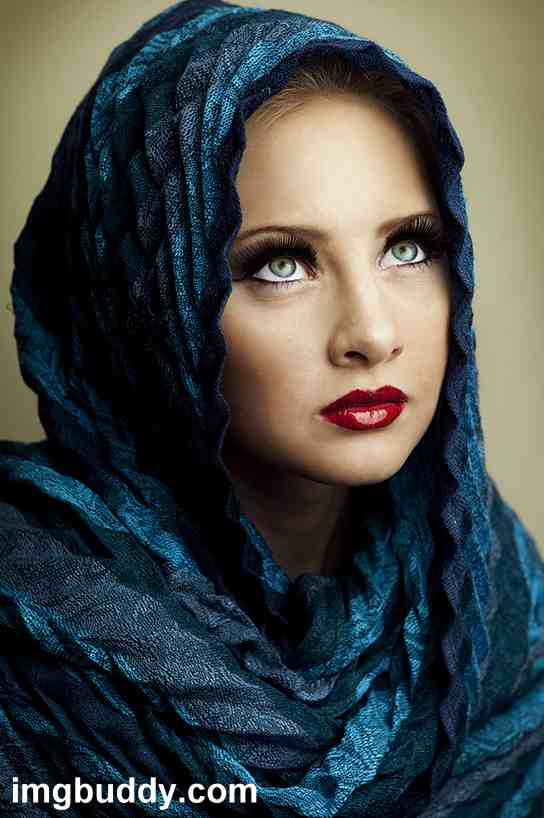 Fatima
I believes Muslim women should wear the burqa in the public
domain; Fatima II believes it is her right to wear jeans.
Fatima I likes to listen to music. In Taliban-held territory,
it's a crime to possess a radio. Ahmed I believes good Muslims
should pray five times a day facing Mecca; Ahmed II believes
a good Muslim is one who lives by the Ten Commandments.
Ahmed I abides by Sharia law, Ahmed II by the laws of the
country in which he finds himself. Fatima
I believes Muslim women should wear the burqa in the public
domain; Fatima II believes it is her right to wear jeans.
Fatima I likes to listen to music. In Taliban-held territory,
it's a crime to possess a radio. Ahmed I believes good Muslims
should pray five times a day facing Mecca; Ahmed II believes
a good Muslim is one who lives by the Ten Commandments.
Ahmed I abides by Sharia law, Ahmed II by the laws of the
country in which he finds himself.
Before
our very eyes that have been dimmed by fear mongering of the
worst kind and a deficit of fact-based, responsible journalism,
Islam is splintering into two no less than Christianity split
into two in 1517. In that year, corruption and abuses within
the church hit a critical mass begetting a massive protest
movement that eventuated Protestantism. Today, in the early
21st century, a significant number of Muslims can no longer
abide by the strict, and highly contentious (arbitrary) interpretation
of Quranic doctrine as it is expounded and disseminated by
Al Qaeda-ISIL and Wahhabism et al, whose backwards
looking stance on religion and politics, and repressive codes
of conduct have no practical purchase in the modern world.
In short, there
are many practicing Muslims who no longer recognize the
Islam that regards and treats all non-Muslims as infidels,
that cherry-picks from the Quran in order to supply the
raw materials for human bomb making factories, and for whom
all murderous and treasonous ends justify the means of establishing
a worldwide Caliphate.
As a reaction
-- enabled by the Internet, the pipeline through which western
culture seeps into the previously impervious Muslim fortress
world -- to this rear-view-mirror, tyrannical fundamentalism
arises the moderate Muslim, the majority of whom have been
co-opted by western culture but who still look to Islam
to satisfy their spirtual needs. Many of these thoroughly
modern Muslims -- Islam’s first infidels -- live in
the West but still speak Arabic, and, in the spirit of reform,
envision an Islam that is elastic enough to allow both men
and women, in their new found lands, to participate in the
affairs of the modern world – without looking back
in fear or self-recrimination. Presently lacking in spokespersons
and a coherent narrative, this burgeoning reconfiguration
of Islam has become, in a very short time, incompatible
with the strict doctrinal Islam of the Quran. And while
it is still too soon for history to render its verdict,
this decisive turning away from the absolutism as laid out
by the Quran and Hadiths marks the beginning of the great
schism or what I ‘christen’ the Reformadhist
Reformation, which, despite the apparent (in the short term)
failure of the Arab Spring, springs directly from that initial
wave of discontent that boldly attempted to rid plutocratic
Egypt, Libya and Tunisia of their corrupt oligarchies.
Not unlike the
very early disillusioned Protestants who nonetheless continued
to believe in Christ, the Reformadhists continue to believe
in Allah, but they no longer identify with the Islam that
throws up an arbitrary wall between itself and the modern
world. They argue that wearing a baseball cap and jeans,
or a skirt above the ankles, or enjoying a glass of wine
with a meal doesn’t make them any less Muslim: “every
generation is equidistant from God,” writes Leopold
von Ranke.
Reformadhists
reject the directives disingenuously attributed to the Quran
that oblige them to regard the other as “the infidel”
or the West as “great Satan,” just as many question
the presumption that the Almighty blesses ‘all’
acts carried out in his name and honour. Among the movement's
non-negotiable first principles is its position against
the barbaric androcentricism that excuses rape and infidelity
if it is carried out by a man and stones to death the fallen
woman for the same; that women hold up half the sky is a
given, and not something to be got.
It is moot whether
or not there is such a thing as the moderate Muslim since
he represents the leading edge of the great schism. What
the movement currently lacks is a coherent vision and a
broad consensus of principles that will provide Reformadhism
with the clarity and confidence required to defend itself
against an increasingly isolated and vengeful fundamentalist
Islam. The challenge of the West is to first of all grant
Reformadhism the status is deserves, encourage its development,
recognizing that a potentially powerful ally is at hand
in the ongoing war against the pyschopathic Islamist machine.
When
the Reformadhist's break from radical Islam is complete, the
latter’s position will look less like a war against
modernity and more like a last stand.
However, as
the movement gains momentum it should be wary of support
coming from western extremists and their dubious agenda,
convinced that the blight and scourge that is Islam derive
'directly' from the Quran. They argue that for the sake
of the greater good of world peace, the only proper (moral)
course for Islam to follow is to self-negate itself out
of existence. With sword-pen in hand, they will man the
front lines and profess solidarity with the Reformadhist
movement but only in so far as it serves their hegemoniacal
ends: replacing the fertile "East is East and West
is West" binary with the "West is the Best"
categorical -- and to the manor another fundamentalism is
born. Both Camus and Fanon warned against this as Algeria
(1962) took control of its destiny.
The West should
encourage Reformadhists of the world to unite while recognizing
that the enemy is chameleon and every enlightenment a work
in progress.
|
|
|





































![Canadian Tire Repair Scam [2211 boul Roland-Therrien, Longueuil] = documents-proofs](../2010_v9_n5/images/mapleleaf.jpg)